

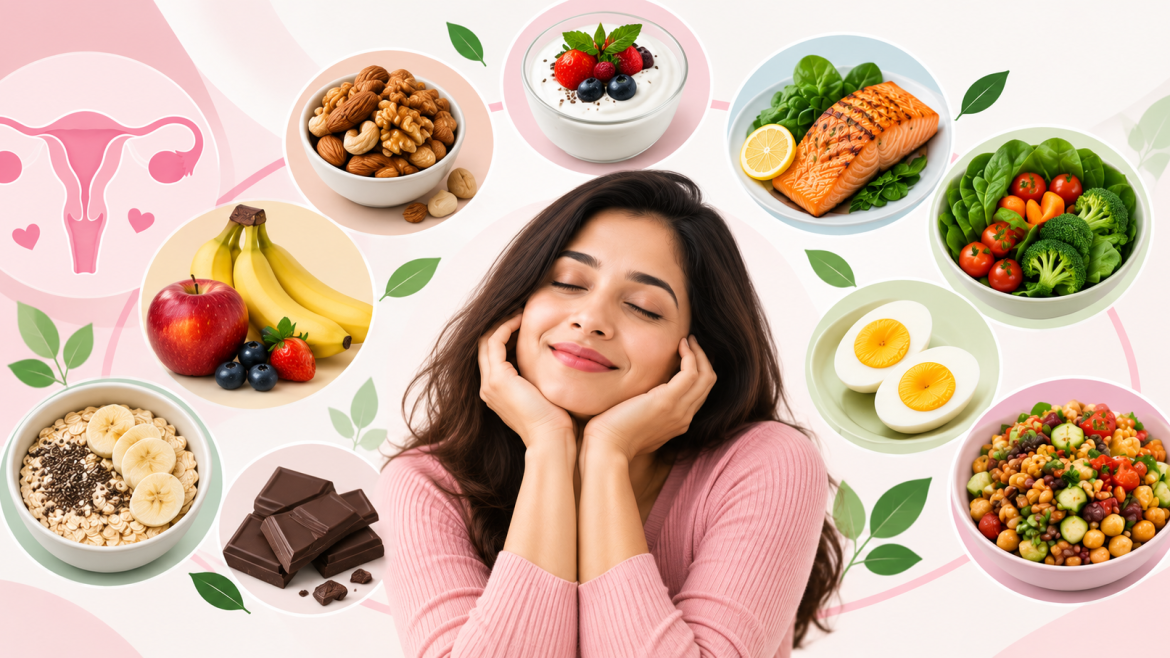
Premenstrual syndrome (PMS) can bring symptoms such as bloating, food cravings, mood changes, fatigue, headaches, and breast tenderness in the days before a period.
While food cannot completely prevent PMS, a balanced and nutrient-rich diet can support your overall health and may help you manage some symptoms.
Instead of following a restrictive diet during PMS, focus on regular meals containing protein, fibre-rich carbohydrates, vegetables, fruits, and healthy fats.
1. Include Magnesium-Rich Foods
Magnesium is involved in many normal body functions, including muscle and nerve function.
Foods that provide magnesium include:
- Almonds and cashews
- Pumpkin seeds
- Spinach and other leafy greens
- Beans and legumes
- Whole grains
- Dark chocolate with a high cocoa content
A small portion of dark chocolate can also be a practical option when you’re craving something sweet.
2. Choose Calcium-Rich Foods
Calcium is important for bone and muscle health, and getting enough calcium is particularly important for women.
Good sources include:
- Milk
- Plain curd
- Paneer
- Calcium-fortified foods
- Tofu prepared with calcium
- Certain leafy green vegetables
Try plain curd with fruit for a simple and nutritious snack.
3. Add Protein to Every Meal
Protein can help make meals more satisfying and supports muscle maintenance.
Useful protein sources include:
- Dal
- Rajma
- Chole
- Paneer
- Tofu
- Eggs
- Curd or Greek yogurt
- Chicken
- Fish
- Soy
- Sprouts
For example, instead of eating only roti and sabzi, add dal, curd, paneer, eggs, or another protein source.
4. Choose Fibre-Rich Carbohydrates
You don’t need to completely avoid carbohydrates during PMS.
Carbohydrate-rich foods can be included as part of balanced meals. Choose fibre-rich options more often, such as:
- Oats
- Whole-wheat roti
- Brown rice
- Millets
- Fruits
- Vegetables
- Beans and legumes
Pairing carbohydrates with protein and fibre can make meals more satisfying.
5. Eat Fruits and Vegetables
Fruits and vegetables provide fibre, vitamins, minerals, water, and other beneficial nutrients.
Include a variety such as:
- Banana
- Orange
- Guava
- Berries
- Spinach
- Carrots
- Cucumber
- Tomatoes
- Broccoli
Rather than searching for one “best PMS food,” aim for variety throughout the week.
6. Include Omega-3-Rich Foods
Omega-3 fatty acids are an important part of a balanced diet.
Sources include:
- Fatty fish such as salmon and sardines
- Walnuts
- Flaxseeds
- Chia seeds
Vegetarians can include plant-based sources such as walnuts, chia seeds, and ground flaxseeds.
7. Stay Hydrated
Bloating may make you feel like drinking less water, but staying adequately hydrated remains important.
Keep water available throughout the day. Fruits and vegetables with a high water content can also contribute to hydration.
If you drink a lot of caffeinated beverages, consider whether reducing them helps symptoms such as sleep problems, anxiety, or breast tenderness.
What to Eat When PMS Cravings Hit
Cravings for sweet or salty foods are common around menstruation.
You don’t have to feel guilty about having something you enjoy.
Try combining satisfaction with nutrition:
Sweet craving:
Fruit + curd, banana + nut butter, or a small amount of dark chocolate.
Crunchy craving:
Roasted chana, roasted makhana, or a small portion of nuts.
More hunger than usual:
Choose a proper balanced meal or a protein-rich snack instead of trying to ignore genuine hunger.
The goal is balance, not restriction.
Foods You May Want to Limit During PMS
You don’t need to completely ban particular foods. However, some people find it useful to reduce excessive amounts of:
- Very salty packaged foods
- Foods high in added sugar
- Sugary beverages
- Excessive caffeine
- Alcohol
- Frequently fried or highly processed foods
Pay attention to how different foods affect your own symptoms.
Simple Indian PMS Meal Plan Example
Breakfast
Moong dal chilla + curd + fruit
Mid-Morning
Fruit + a small portion of nuts
Lunch
Roti + dal + green vegetables + curd + salad
Evening Snack
Roasted chana or makhana + unsweetened beverage
Dinner
Paneer/tofu/chicken/fish + vegetables + roti or rice
Sweet Craving
Fruit with curd or a small portion of dark chocolate
This is only a general example. Individual nutritional requirements vary.