

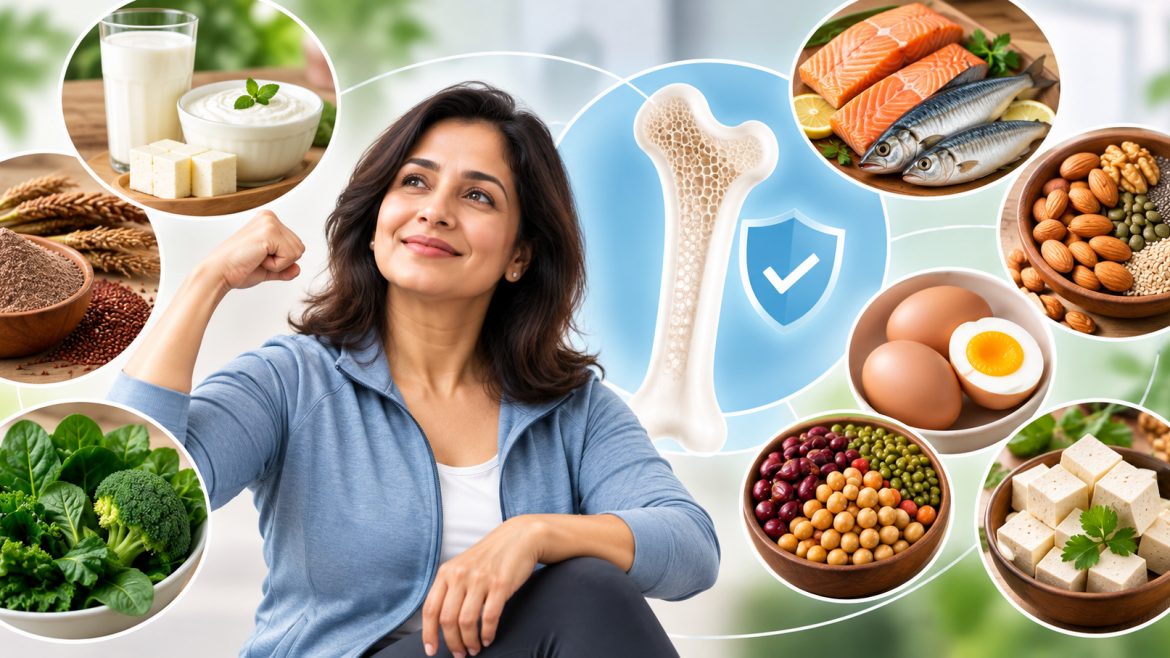
As we get older, maintaining strong and healthy bones becomes increasingly important. After the age of 40, changes in hormones, physical activity, and natural aging can gradually affect bone health.
For women, bone health deserves particular attention around menopause because declining estrogen levels can accelerate bone loss.
Nutrition alone cannot prevent every bone-related problem, but a balanced diet containing calcium, vitamin D, protein, magnesium, and other important nutrients can support normal bone health.
Here are some nutritious foods to include in your diet after 40.
1. Milk, Curd and Other Dairy Foods
Dairy foods are convenient sources of calcium and protein.
Good options include:
- Milk
- Plain curd
- Paneer
- Greek yogurt
- Cheese in appropriate portions
Calcium is an important mineral for maintaining normal bones and teeth.
If you don’t consume dairy, choose suitable calcium-fortified alternatives and check the nutrition label.
2. Ragi
Ragi, also known as finger millet, can contribute calcium and other nutrients to the diet.
It can be included as:
- Ragi roti
- Ragi dosa
- Ragi porridge
- Ragi cheela
Remember that no single food provides everything your bones need, so include ragi as part of a varied diet rather than depending on it alone.
3. Leafy Green Vegetables
Green vegetables provide several nutrients that contribute to overall health.
Include a variety such as:
- Kale
- Broccoli
- Methi
- Bathua
- Other leafy greens
Different greens vary considerably in calcium content and absorption, so variety is important.
4. Protein-Rich Foods
Protein is important for maintaining muscle as well as supporting the structure of bones.
Include protein sources such as:
- Dal
- Rajma
- Chole
- Paneer
- Tofu
- Soy
- Eggs
- Chicken
- Fish
- Curd
Maintaining muscle is also important because stronger muscles support mobility and physical function as you age.
5. Fatty Fish
Fatty fish such as salmon and sardines can provide protein and vitamin D, although the amount varies between foods.
Some fish, particularly canned varieties eaten with their edible bones, can also provide calcium.
Vitamin D helps the body absorb calcium and is therefore important for normal bone health.
6. Nuts and Seeds
Nuts and seeds can provide protein, healthy fats, magnesium, and other minerals.
Useful options include:
- Almonds
- Sesame seeds
- Chia seeds
- Pumpkin seeds
- Flaxseeds
Because nuts and seeds are energy-dense, keep portions appropriate for your overall dietary needs.
7. Eggs
Eggs provide high-quality protein and small amounts of vitamin D, mainly in the yolk.
They can be combined with vegetables and whole grains to create a balanced breakfast or meal.
Nutrients That Matter for Bone Health After 40
Calcium
Calcium is essential for maintaining normal bones. Dairy products, calcium-set tofu, some fortified foods, and certain vegetables can contribute to calcium intake.
Vitamin D
Vitamin D helps your body absorb calcium. Food sources are relatively limited, so vitamin D status may also depend on sun exposure and, when medically appropriate, supplementation.
Protein
Adequate protein helps maintain muscle and contributes to overall bone health.
Magnesium
Magnesium contributes to normal bone structure and can be obtained from nuts, seeds, legumes, whole grains, and green vegetables.
Don’t Forget Strength and Weight-Bearing Exercise
Food is only one part of maintaining healthy bones.
Regular weight-bearing and resistance exercise can help support bone and muscle health.
Depending on your health and fitness level, activities may include:
- Walking
- Stair climbing
- Resistance exercises
- Strength training
- Dancing
Choose activities that are appropriate for your physical condition and ability.
Should You Take Calcium Supplements After 40?
Not everyone automatically needs a calcium supplement after turning 40.
Your requirements depend on factors such as your diet, age, sex, health conditions, medications, and individual risk of osteoporosis.
Taking supplements unnecessarily or in excessive amounts may have risks. Discuss calcium or vitamin D supplementation with a qualified healthcare professional rather than starting high-dose supplements on your own.
Simple Indian Meal Ideas for Bone Health
Breakfast:
Ragi dosa + curd
Lunch:
Roti + dal + green vegetables + curd
Snack:
Fruit + a small portion of nuts or seeds
Dinner:
Paneer/tofu/fish + vegetables + roti
These are general examples and should be adjusted according to individual nutritional needs.