

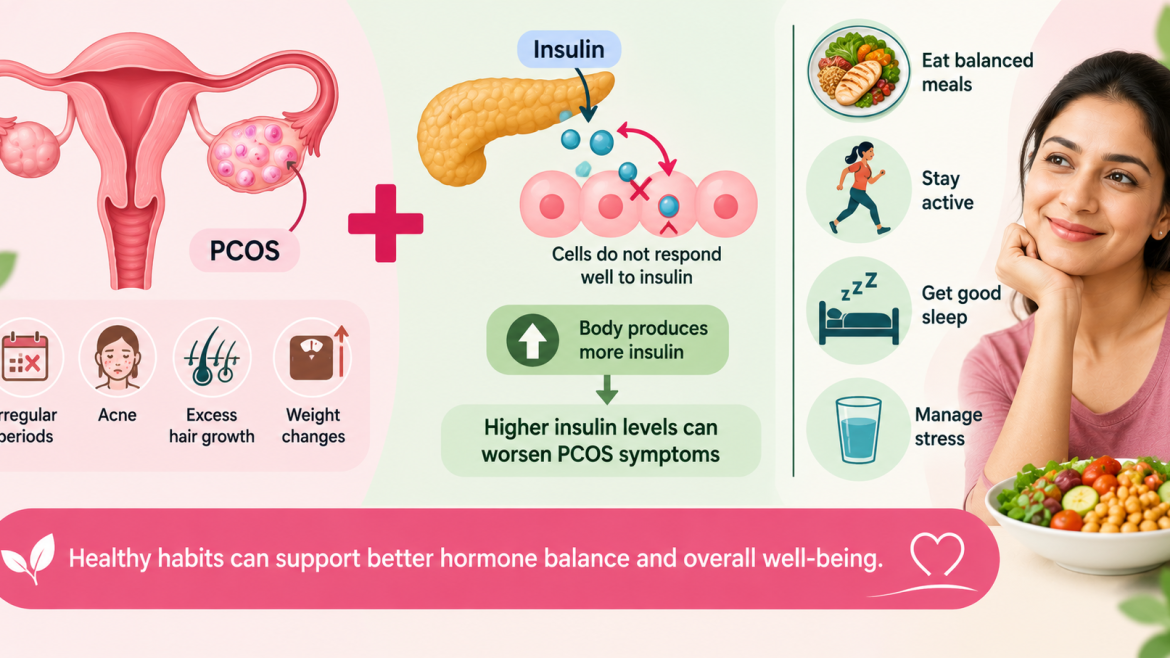
Polycystic ovary syndrome (PCOS) is a common hormonal condition that can affect women during their reproductive years. One factor that is often associated with PCOS is insulin resistance.
Understanding the connection between PCOS and insulin resistance can make it easier to understand why nutrition, physical activity, sleep, and healthy lifestyle habits are often discussed when managing PCOS.
What Is Insulin Resistance?
Insulin is a hormone that helps your body use glucose from the food you eat for energy.
After you eat, carbohydrates are broken down into glucose, which enters your bloodstream. Your pancreas releases insulin, which helps move glucose from the blood into cells where it can be used for energy.
Insulin resistance happens when the body’s cells do not respond to insulin as effectively as they should.
As a result, the body may produce more insulin to help maintain normal blood glucose levels.
How Is Insulin Resistance Connected to PCOS?
Insulin resistance can occur in some women with PCOS. When insulin levels are elevated, it can influence ovarian hormone production and may contribute to hormonal changes associated with PCOS.
This can be linked with symptoms such as:
- Irregular menstrual cycles
- Difficulty with ovulation
- Acne
- Excess facial or body hair
- Weight changes
- Difficulty managing weight in some individuals
However, not every woman with PCOS has insulin resistance, and PCOS can occur in people of different body sizes.
A Simple Example
Think of insulin as a key that helps glucose enter your body’s cells.
When the cells become less responsive to insulin, the key doesn’t work as efficiently.
Your body may respond by producing more insulin.
Higher insulin levels can influence other metabolic and hormonal processes, which is one reason insulin resistance is important to understand in PCOS.
Does Insulin Resistance Cause PCOS?
The relationship is more complicated than simply saying insulin resistance causes PCOS.
PCOS is a complex condition involving hormonal, metabolic, and genetic factors. Insulin resistance can contribute to hormonal changes in some women with PCOS, but it is not the only factor involved.
This is why PCOS management should be individualized.
Common Signs Associated With PCOS
PCOS can present differently from one person to another.
Some commonly associated symptoms include:
Irregular Periods
Periods may occur less frequently or become unpredictable because ovulation may not happen regularly.
Acne
Hormonal changes associated with PCOS may contribute to persistent acne in some women.
Excess Hair Growth
Some women experience increased facial or body hair due to higher androgen activity.
Weight Changes
Some women with PCOS experience weight gain or difficulty losing weight, while others do not.
Difficulty Getting Pregnant
Irregular ovulation can make conception more difficult for some women.
Having one or more of these symptoms does not automatically mean you have PCOS. Diagnosis should be made by a qualified healthcare professional.
What Can You Do to Support Metabolic Health?
Lifestyle habits can play an important role in overall health for women with PCOS.
1. Choose Balanced Meals
Instead of completely eliminating carbohydrates, build balanced meals containing:
Protein + Fibre-rich foods + Healthy fats + Appropriate carbohydrates
For example:
Roti + dal + sabzi + curd
or
Brown/regular rice + rajma + vegetables + salad
The best food choices and portions depend on individual nutritional needs.
2. Include Protein in Your Meals
Protein can help make meals more satisfying and supports muscle maintenance.
Good options include:
- Dal
- Rajma
- Chole
- Eggs
- Paneer
- Tofu
- Curd
- Chicken
- Fish
- Soy
- Sprouts
3. Choose Fibre-Rich Foods
Fibre can support digestive health and can help make meals more satisfying.
Include:
- Vegetables
- Fruits
- Whole grains
- Beans
- Lentils
- Seeds
- Nuts
4. Stay Physically Active
Regular physical activity can support metabolic health and insulin sensitivity.
A combination of activities such as walking, strength training, cycling, swimming, or other enjoyable exercise can be useful.
Even small amounts of regular movement can contribute to a healthier lifestyle.
5. Prioritize Sleep
Sleep is an important part of overall metabolic and hormonal health.
Try to maintain a consistent sleep schedule and aim for adequate sleep according to your individual needs.
Foods to Limit
Having PCOS does not mean you need to completely eliminate specific foods.
However, it can be helpful to limit frequent consumption of foods and drinks that are high in added sugar and highly processed ingredients, such as:
- Sugary soft drinks
- Sweetened beverages
- Excessive sweets
- Highly processed snacks
- Frequent deep-fried foods
The goal is better overall dietary quality, not extreme restriction.
Can Losing Weight Improve PCOS?
For women with PCOS who are above their healthy weight range, even modest weight loss may improve some metabolic and reproductive outcomes.
However, weight loss should not be considered the only measure of successful PCOS management.
Women at different body weights can have PCOS and may benefit from healthy nutrition, physical activity, adequate sleep, and appropriate medical care.