

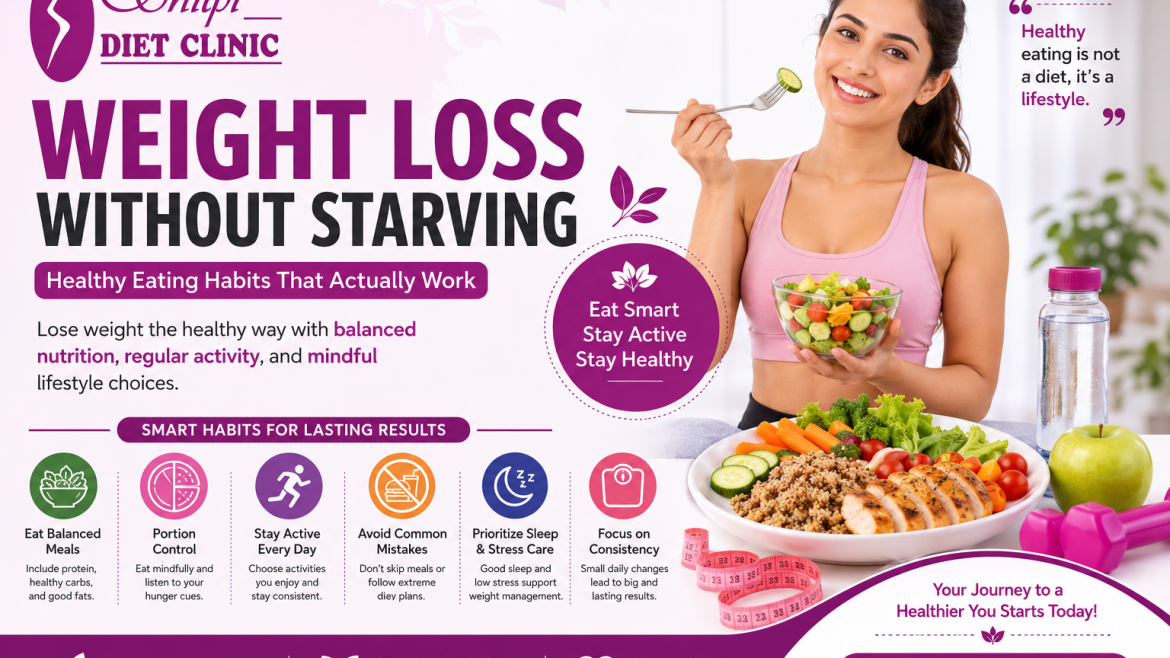
The truth is, successful weight loss isn’t about starving yourself—it’s about nourishing your body with the right foods in the right portions. A balanced diet, combined with regular physical activity and healthy lifestyle habits, helps you lose weight safely while improving your overall well-being.
Rather than chasing quick fixes or extreme diets, adopting sustainable eating habits allows your body to lose fat naturally, maintain muscle mass, and achieve long-term results.
Build Healthy Eating Habits
Healthy weight loss starts with eating balanced, nutrient-rich meals instead of following restrictive diets.
Each meal should include a combination of:
- Lean protein
- Complex carbohydrates
- Healthy fats
- Fibre-rich vegetables
Protein-rich foods such as eggs, paneer, lentils, tofu, fish, and chicken help keep you full for longer while preserving muscle during weight loss.
Whole grains like oats, brown rice, millets, quinoa, and whole wheat provide steady energy, improve digestion, and reduce unhealthy cravings.
Adding plenty of seasonal fruits and vegetables increases fibre intake, supports gut health, and naturally lowers overall calorie consumption without making you feel deprived.
Portion Control Matters
Even healthy foods should be consumed in appropriate portions. Weight loss isn’t just about what you eat—it’s also about how much you eat.
Practicing mindful eating can help prevent overeating and improve your relationship with food.
Simple habits include:
- Use smaller plates and bowls.
- Eat slowly and chew food properly.
- Avoid distractions such as mobile phones or television while eating.
- Listen to your body’s hunger and fullness signals.
- Plan your meals in advance to avoid unhealthy snacking.
Small, consistent changes in portion control can make a significant difference over time.
Stay Active Every Day
Physical activity is an essential part of healthy weight management. Regular exercise helps burn calories, improve metabolism, strengthen muscles, and support heart health.
You don’t need intense workouts every day. Consistency is far more important than perfection.
Activities that support healthy weight loss include:
- Brisk walking
- Cycling
- Yoga
- Swimming
- Strength training
- Dancing
- Light stretching and mobility exercises
Aim to stay active every day in a way that fits your lifestyle and fitness level.
Avoid Common Weight Loss Mistakes
Many popular weight-loss methods promise quick results but often do more harm than good.
Common mistakes include:
- Skipping breakfast
- Completely avoiding carbohydrates
- Following extremely low-calorie diets
- Depending on detox drinks or weight-loss teas
- Cutting out entire food groups
These habits can lead to fatigue, nutritional deficiencies, muscle loss, slower metabolism, and frequent food cravings.
Healthy weight loss should never involve starving yourself. Instead, focus on eating balanced meals at regular intervals while choosing wholesome, minimally processed foods.
Don’t Ignore Sleep and Stress
Weight management is influenced by more than just diet and exercise.
Poor sleep and chronic stress affect hormones that regulate hunger and appetite, making it easier to overeat and harder to lose weight.
To support healthy weight loss:
- Aim for 7–9 hours of quality sleep every night.
- Practice stress-management techniques such as meditation, deep breathing, or yoga.
- Stay hydrated throughout the day.
- Maintain a consistent daily routine.
A healthy mind supports a healthy body.
Sustainable Weight Loss Is the Key
The best weight-loss plan is one that you can follow consistently. Extreme diets may deliver fast results, but they are rarely sustainable.
Healthy eating is about building lifelong habits that nourish your body, improve your health, and help you maintain a healthy weight without feeling deprived.
Remember, lasting success comes from making small, realistic changes that fit your lifestyle—not from starving yourself or following temporary diet trends.
Conclusion
Weight loss doesn’t have to mean hunger, strict restrictions, or giving up the foods you love. By focusing on balanced nutrition, portion control, regular physical activity, quality sleep, and mindful eating, you can achieve sustainable weight loss while improving your overall health.