
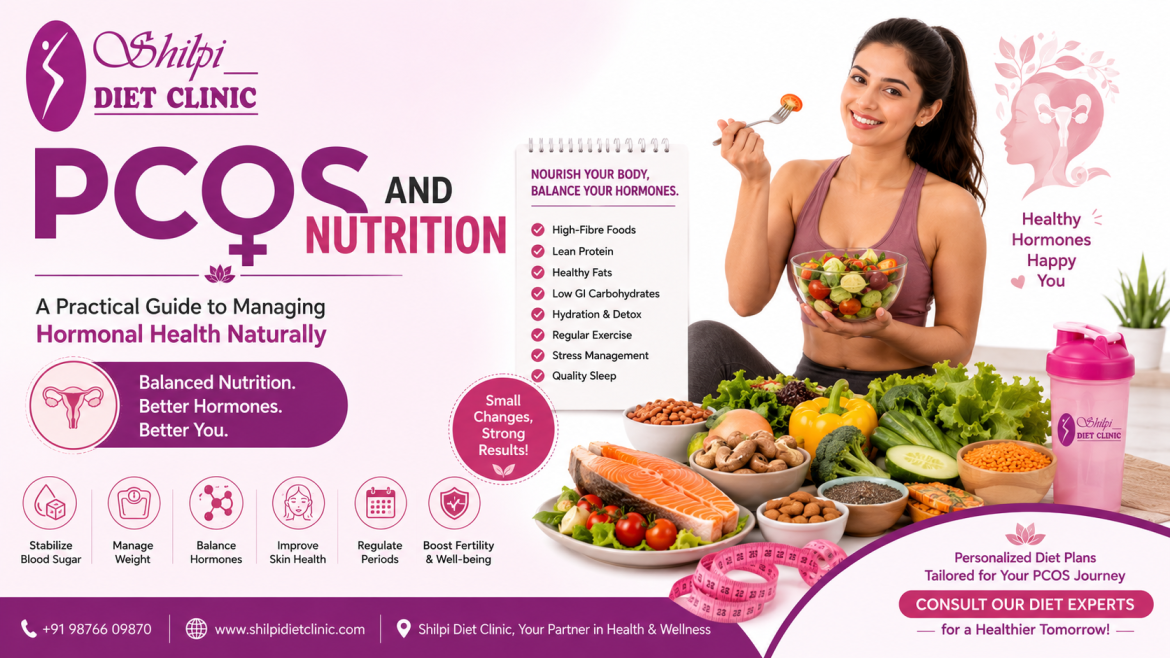
Polycystic Ovary Syndrome (PCOS) is one of the most common hormonal disorders affecting women of reproductive age. It can cause irregular menstrual cycles, weight gain, acne, excessive facial hair, hair thinning, mood changes, and difficulty conceiving. While there is currently no permanent cure for PCOS, the condition can be effectively managed through healthy nutrition, regular physical activity, and positive lifestyle changes.
Many women believe they need to follow restrictive diets or eliminate entire food groups to manage PCOS. In reality, the most effective approach is a balanced, nutrient-rich diet that supports hormone regulation, improves insulin sensitivity, and promotes overall well-being. Rather than focusing only on weight loss, the goal should be to nourish your body, reduce inflammation, and create sustainable habits that improve long-term health.
Understanding the Link Between Nutrition and PCOS
One of the major factors associated with PCOS is insulin resistance. This means the body’s cells become less responsive to insulin, causing the pancreas to produce more insulin to keep blood sugar levels stable.
High insulin levels can increase the production of androgens (male hormones), which may worsen common PCOS symptoms such as irregular periods, acne, unwanted facial hair, and weight gain.
A balanced diet helps:
- Improve insulin sensitivity
- Stabilize blood sugar levels
- Reduce inflammation
- Support hormone balance
- Improve metabolism
- Promote healthy weight management
Making healthier food choices consistently can have a significant positive impact on managing PCOS symptoms.
Foods to Include in a PCOS-Friendly Diet
Choosing whole, nutrient-dense foods is one of the best ways to support hormonal health naturally.
High-Fibre Foods
Fibre slows digestion, helps regulate blood sugar levels, improves gut health, and keeps you feeling full for longer.
Include foods such as:
- Green leafy vegetables
- Broccoli and cauliflower
- Oats
- Brown rice
- Millets
- Lentils
- Chickpeas
- Beans
- Apples
- Pears
- Seasonal fruits
Aim to include vegetables in every meal to increase your daily fibre intake.
Lean Protein
Protein supports muscle maintenance, improves satiety, and helps reduce unhealthy cravings.
Healthy protein sources include:
- Eggs
- Paneer
- Tofu
- Fish
- Chicken
- Greek yogurt
- Lentils
- Pulses
- Soy products
Including protein in each meal can help maintain stable energy levels throughout the day.Healthy Fats
Healthy Fats
Healthy fats are essential for hormone production and reducing inflammation.
Good choices include:
- Almonds
- Walnuts
- Flaxseeds
- Chia seeds
- Olive oil
- Avocados
- Pumpkin seeds
Consume these in moderation as part of a balanced diet.
Foods to Limit
While no food needs to be completely eliminated, reducing certain foods may help improve insulin resistance and hormonal balance.
Try to limit:
- Sugary beverages
- Packaged snacks
- White bread
- Refined flour products
- Deep-fried foods
- Processed foods
- Excess sweets and desserts
- Highly processed fast food
Choosing whole, minimally processed foods most of the time supports better long-term health.
Lifestyle Habits That Support Hormonal Health
Nutrition works best when combined with healthy lifestyle habits.
Stay Physically Active
Regular exercise improves insulin sensitivity, supports healthy weight management, and enhances mood.
Activities that can help include:
- Brisk walking
- Yoga
- Cycling
- Swimming
- Strength training
- Dancing
Aim for at least 30 minutes of physical activity on most days of the week.
Prioritize Quality Sleep
Poor sleep can disrupt hormone regulation, increase stress hormones, and trigger cravings for unhealthy foods.
Aim for 7–9 hours of quality sleep every night to support hormonal balance and overall wellness.
Manage Stress Effectively
Chronic stress may worsen PCOS symptoms by affecting hormone levels.
Helpful stress-management techniques include:
- Meditation
- Deep breathing exercises
- Yoga
- Reading
- Spending time in nature
- Pursuing hobbies you enjoy
Even a few minutes of relaxation each day can make a difference.
Why Personalized Nutrition Matters
Every woman experiences PCOS differently. Some may struggle with weight gain, while others experience irregular periods, acne, fertility concerns, or excessive hair growth.
Because symptoms vary from person to person, a generic online diet plan may not provide the best results.
A personalized nutrition plan considers:
- Medical history
- Lifestyle
- Eating habits
- Food preferences
- Activity level
- Health goals
Working with a qualified dietitian ensures your nutrition plan is practical, balanced, and tailored to your body’s unique needs.
Small Daily Habits That Make a Big Difference
Managing PCOS doesn’t require perfection. Small, consistent lifestyle changes often produce the best long-term results.
Simple habits include:
- Eat balanced meals at regular intervals.
- Include protein with every meal.
- Choose whole grains instead of refined carbohydrates.
- Drink enough water throughout the day.
- Exercise regularly.
- Get adequate sleep.
- Manage stress effectively.
- Avoid skipping meals.
Consistency is far more important than following extreme diets.
Conclusion
Living with PCOS can be challenging, but the right nutrition and lifestyle choices can make a significant difference. A balanced diet rich in fibre, lean protein, healthy fats, and whole foods helps improve insulin sensitivity, supports hormone balance, and promotes overall health.
Rather than following restrictive diets or quick fixes, focus on building sustainable habits that nourish your body and fit your lifestyle. With the guidance of a qualified dietitian and a personalized nutrition plan, managing PCOS becomes more practical, achievable, and effective.
Healthy hormones begin with healthy habits. Every small step you take today can contribute to a healthier, more balanced tomorrow.