

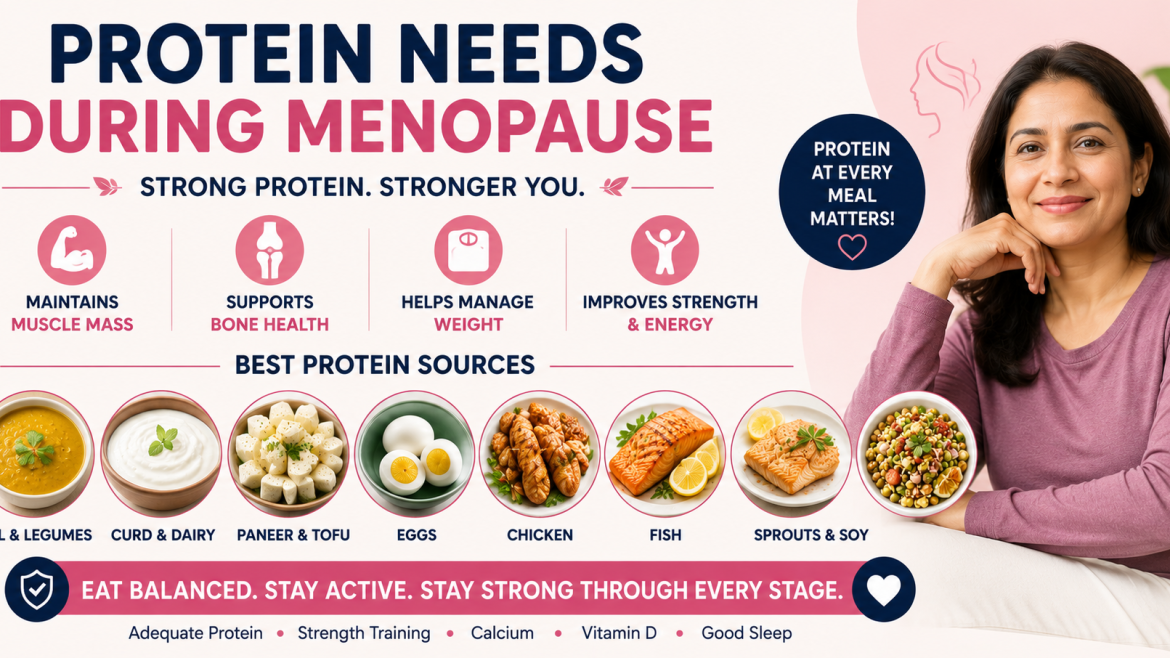
Menopause is a natural stage of life that brings changes in hormones, body composition, metabolism, and muscle health. During this time, protein becomes an important part of a balanced diet because it supports muscle maintenance, strength, and overall nutrition.
As women get older, maintaining muscle becomes increasingly important. Combining adequate protein with regular physical activity, especially resistance exercise, can help support healthy aging.
Why Is Protein Important During Menopause?
1. Protein Helps Maintain Muscle Mass
Age-related muscle loss can become more noticeable during and after menopause. Getting enough protein as part of a balanced diet can help provide the amino acids your body needs for muscle maintenance.
Protein works best alongside regular physical activity, particularly strength or resistance training.
2. Protein Supports Strength and Healthy Aging
Muscle strength is important for everyday activities such as walking, climbing stairs, lifting objects, and maintaining independence.
A balanced diet that provides adequate protein, along with regular exercise, can support strength and physical function as you age.
3. Protein Can Help With Fullness
Many women experience changes in appetite or body composition during menopause.
Protein-rich foods can help make meals more satisfying, which may make it easier to manage portions and maintain healthy eating habits.
Instead of having a meal based mainly on carbohydrates, try including a protein source alongside vegetables and appropriate portions of whole grains or other carbohydrates.
4. Protein Supports Weight Management
Changes in body composition during menopause can make weight management more challenging for some women.
Protein can be part of a balanced weight-management plan because it supports muscle maintenance and can contribute to meal satisfaction.
However, eating more protein alone does not guarantee weight loss. Overall calorie intake, food quality, physical activity, sleep, and lifestyle habits also matter.
How Much Protein Do You Need During Menopause?
There is no single protein amount that is ideal for every woman.
Protein requirements can vary depending on:
- Age
- Body weight
- Physical activity
- Muscle mass
- Overall diet
- Health conditions
- Fitness goals
For healthy adults, protein needs are commonly discussed in relation to body weight, but individual needs can be different.
If you have kidney disease or another medical condition that affects protein intake, speak with your doctor or qualified dietitian before significantly increasing your protein consumption.
Best Protein Foods for Women During Menopause
You don’t need expensive foods or supplements to include protein in your diet.
Vegetarian Protein Sources
- Dal
- Rajma
- Chole
- Paneer
- Tofu
- Soy
- Curd
- Greek yogurt
- Milk
- Sprouts
- Beans
Non-Vegetarian Protein Sources
- Eggs
- Chicken
- Fish
- Lean meat
Try to include a protein source at breakfast, lunch, and dinner rather than consuming most of your protein in only one meal.
Easy High-Protein Indian Meal Ideas
Breakfast
Moong dal chilla + curd
Lunch
Roti + dal + vegetables + curd
Snack
Roasted chana + fruit
Dinner
Paneer/tofu/chicken + vegetables + roti
These are general examples. Your portions and food choices should be adjusted according to your individual nutritional needs.
Protein and Bone Health During Menopause
Bone health is another important consideration during and after menopause.
Protein is one component of a healthy diet, but bone health also depends on nutrients such as calcium and vitamin D, along with regular physical activity and other lifestyle factors.
Include calcium-rich foods such as:
- Milk
- Curd
- Paneer
- Calcium-fortified foods
- Certain leafy green vegetables
If you are concerned about bone health, discuss your individual calcium, vitamin D, and other nutritional needs with a healthcare professional.
Do You Need Protein Powder During Menopause?
Not necessarily.
Protein powder can be convenient for some people, but it is not essential for every woman.
Many women can obtain adequate protein through foods such as dal, beans, eggs, dairy, paneer, tofu, soy, chicken, and fish.
Supplements should be considered based on individual nutritional needs rather than simply because you are going through menopause.
Common Protein Mistakes During Menopause
Eating a Protein-Poor Breakfast
Breakfast consisting mainly of tea, biscuits, toast, or cereal may provide relatively little protein.
Try adding eggs, curd, paneer, dal, sprouts, or another suitable protein source.
Eating Most Protein Only at Dinner
Instead of having very little protein throughout the day and a large protein-heavy dinner, distribute protein-containing foods across meals.
Depending Too Much on Supplements
Protein supplements can be useful in some situations, but whole foods provide a wider range of nutrients.
Forgetting Strength Training
Protein and exercise work together. Regular resistance training can help support muscle strength and function during healthy aging.