
Polycystic Ovary Syndrome (PCOS) is a common hormonal condition that can affect menstrual cycles, ovulation, metabolism, skin, hair, and weight. While there is no single diet that works for everyone with PCOS, everyday food choices can influence blood sugar control, energy levels, and overall metabolic health.
Many people focus on what they should eat for PCOS but overlook simple daily eating habits that may make healthy routines harder to maintain. Here are five common diet mistakes to watch out for.
1. Skipping Meals and Eating at Irregular Times
Skipping breakfast or regularly going long periods without eating may leave you extremely hungry later in the day. This can make it easier to overeat or choose highly processed foods when hunger becomes intense.
Instead of following an unnecessarily restrictive eating schedule, aim for balanced meals at reasonably consistent times. Include protein, vegetables or fruit, whole grains or other high-fibre carbohydrates, and healthy fats according to your individual nutritional needs.
2. Eating Too Many Refined Carbohydrates
Foods such as sugary cereals, biscuits, sweets, pastries, white bread, and other highly refined carbohydrate sources can make it difficult to maintain balanced meals, especially when eaten frequently and without protein or fibre.
You do not necessarily need to eliminate carbohydrates from your diet. Choosing higher-fibre options such as oats, whole grains, beans, lentils, vegetables, and whole fruits can help create more balanced meals.
3. Drinking Too Many Sugary Beverages
Soft drinks, sweetened juices, energy drinks, flavoured coffees, and other sugary beverages can add significant amounts of sugar without providing much satiety.
Replacing some sugary drinks with water, unsweetened tea, or other low-sugar options can be a simple everyday change. If you enjoy sweet beverages, gradually reducing added sugar may be easier to maintain than making sudden, extreme restrictions.
4. Following Extreme or Very Restrictive Diets
A common mistake is believing that PCOS requires completely removing entire food groups or following a highly restrictive diet. Such approaches may be difficult to sustain and can make it harder to meet nutritional needs.
Instead, focus on an overall balanced eating pattern. Include a variety of vegetables, fruits, protein-rich foods, whole grains or other high-fibre carbohydrates, and sources of healthy fats. The right approach can vary depending on your health goals, food preferences, medications, and individual nutritional needs.
5. Focusing Only on Calories Instead of Food Quality
Calories can be relevant when managing body weight, but nutrition is about more than a number. A diet that focuses only on calorie restriction may overlook protein, fibre, vitamins, minerals, and overall meal quality.
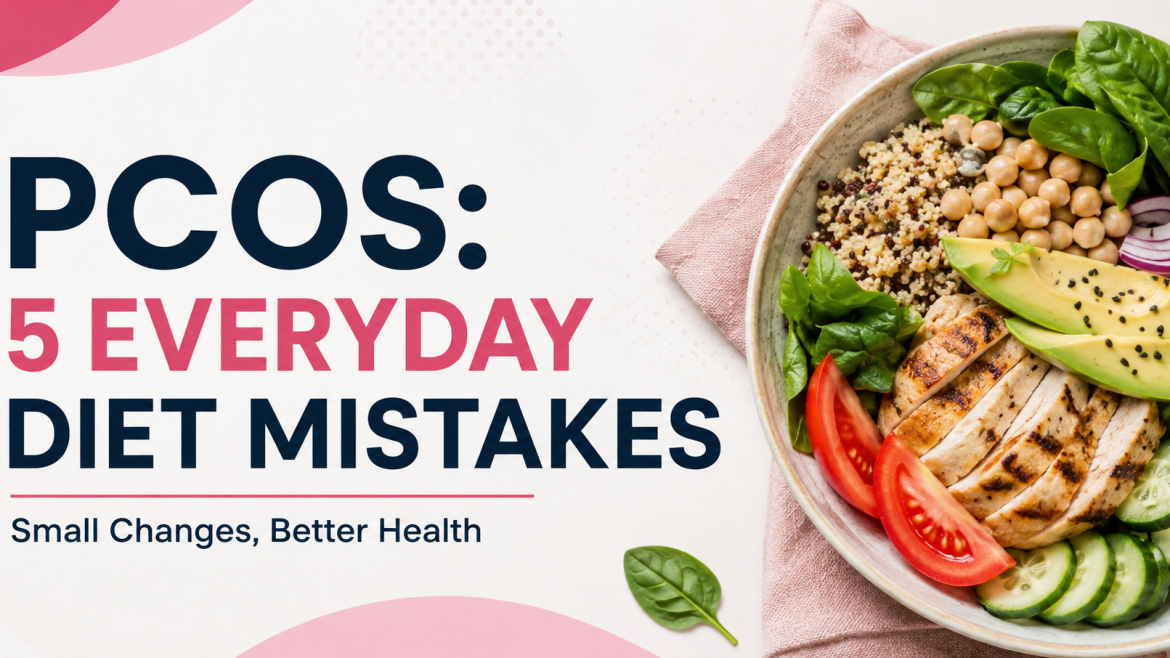
For PCOS, building balanced meals can be more practical than concentrating exclusively on calorie counting. A simple plate can include a protein source, plenty of non-starchy vegetables, a high-fibre carbohydrate, and a moderate amount of healthy fat.
Simple Diet Habits That May Help With PCOS
Instead of trying to change everything at once, start with small and sustainable habits:
- Choose more minimally processed foods.
- Include protein with your main meals.
- Add fibre-rich vegetables, fruits, legumes, and whole grains.
- Limit frequent consumption of sugary drinks and highly processed snacks.
- Drink enough water throughout the day.
- Avoid unnecessary crash diets or extreme food restrictions.
- Focus on consistency rather than perfection.
Final Thoughts
Managing PCOS is not about following one “perfect” diet. Small, consistent dietary improvements can support overall health and may help with some metabolic aspects associated with PCOS. The most suitable eating pattern depends on the individual, so a personalised approach is often more useful than following generic diet rules from social media.
If you have PCOS or are experiencing irregular periods, unexplained weight changes, excessive hair growth, acne, or other symptoms, speak with a qualified healthcare professional for appropriate evaluation and personalised advice.
Disclaimer: This article is for general educational purposes only and should not be considered medical advice, diagnosis, or treatment. Dietary and lifestyle recommendations should be personalised with guidance from a qualified healthcare professional or registered dietitian.