

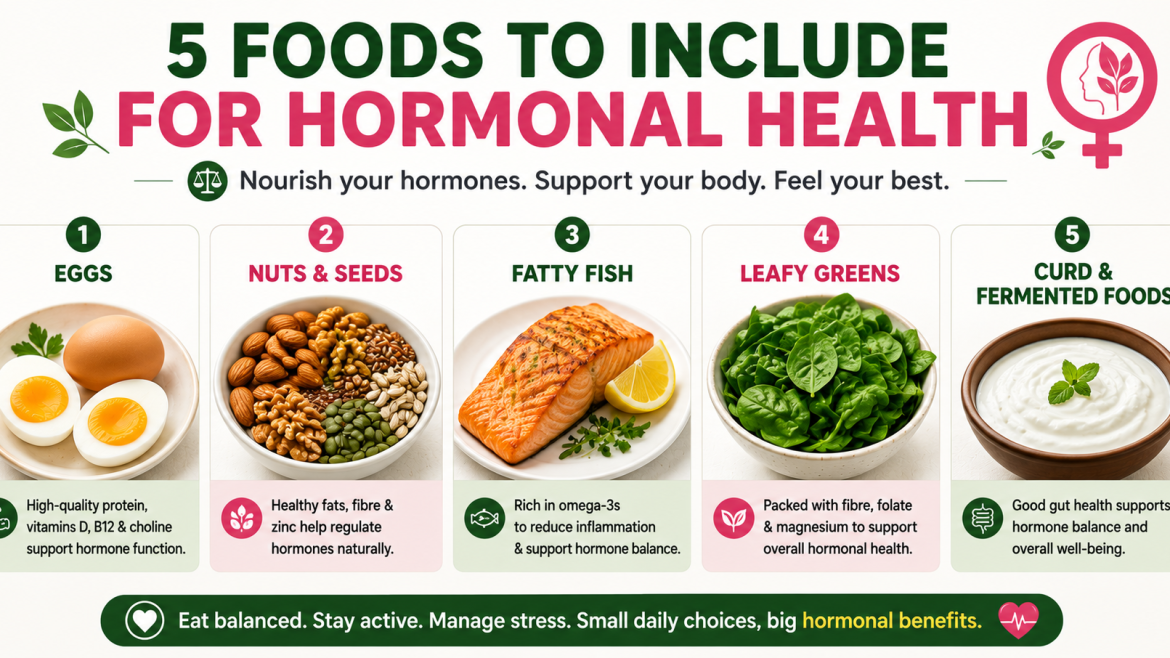
Hormones play an important role in many functions of the body, including metabolism, reproductive health, mood, sleep, and energy. While no single food can “balance” hormones on its own, a balanced and nutrient-rich diet can support overall health and normal hormone function.
For women, especially during different stages of life, eating a variety of whole foods can help provide important nutrients needed for overall wellbeing.
Here are 5 nutritious foods to include for hormonal health.
1. Eggs
Eggs are a convenient source of high-quality protein and also provide nutrients such as choline, vitamin B12, selenium, and vitamin D.
Including adequate protein in your meals can help support muscle maintenance and overall nutrition.
Easy options:
- Vegetable omelette
- Boiled eggs
- Egg bhurji
- Egg with whole-wheat roti
2. Nuts and Seeds
Nuts and seeds provide healthy fats, fibre, protein, vitamins, and minerals.
You can include foods such as:
- Almonds
- Walnuts
- Flaxseeds
- Chia seeds
- Pumpkin seeds
- Sunflower seeds
Tip: Choose appropriate portions because nuts and seeds are energy-dense.
You can sprinkle seeds over curd, oats, salads, or smoothies.
3. Fatty Fish
Fatty fish such as salmon, sardines, and mackerel provide omega-3 fatty acids, along with protein and other important nutrients.
Omega-3 fats are involved in normal body functions and support overall health.
If you don’t eat fish, plant-based sources such as flaxseeds, chia seeds, and walnuts can contribute omega-3 fats to your diet.
4. Leafy Green Vegetables
Vegetables such as spinach, methi, broccoli, and other leafy greens provide fibre, folate, vitamins, minerals, and antioxidants.
Adding vegetables to your meals can help improve overall diet quality.
Simple ways to include them:
- Palak dal
- Methi roti
- Vegetable sabzi
- Spinach omelette
- Green vegetable salad
Aim for variety rather than relying on just one vegetable.
5. Curd and Other Fermented Foods
Plain curd provides protein and calcium and can be an easy addition to an Indian meal.
A healthy gut is important for overall wellbeing, and fermented foods can be included as part of a varied diet.
Try adding plain curd to:
- Lunch
- Dinner
- Chilla
- Fruit
- Homemade meals
Choose unsweetened curd more often, particularly if you are trying to reduce added sugar.
Other Foods That Support a Balanced Diet
Hormonal health isn’t about eating five specific foods every day. Your overall dietary pattern matters much more.
Also include a variety of:
- Fruits
- Whole grains
- Dal and legumes
- Beans
- Paneer or tofu
- Vegetables
- Healthy fats
- Adequate protein
Foods to Limit for Better Overall Health
You don’t need to completely eliminate any particular food unless medically advised. However, try to limit excessive intake of:
- Highly processed foods
- Sugary drinks
- Added sugars
- Deep-fried foods
- Excessive alcohol
- Highly refined foods
The goal is balance rather than restriction.
Can Food Balance Hormones?
This is an important question.
No single food can guarantee hormone balance or treat a hormonal condition. Hormonal health is influenced by many factors, including nutrition, sleep, physical activity, stress, body composition, age, medications, and underlying health conditions.
If you have symptoms such as irregular periods, unexplained weight changes, persistent acne, excessive hair growth, severe fatigue, or other concerns, speak with a qualified healthcare professional rather than relying only on dietary changes.