

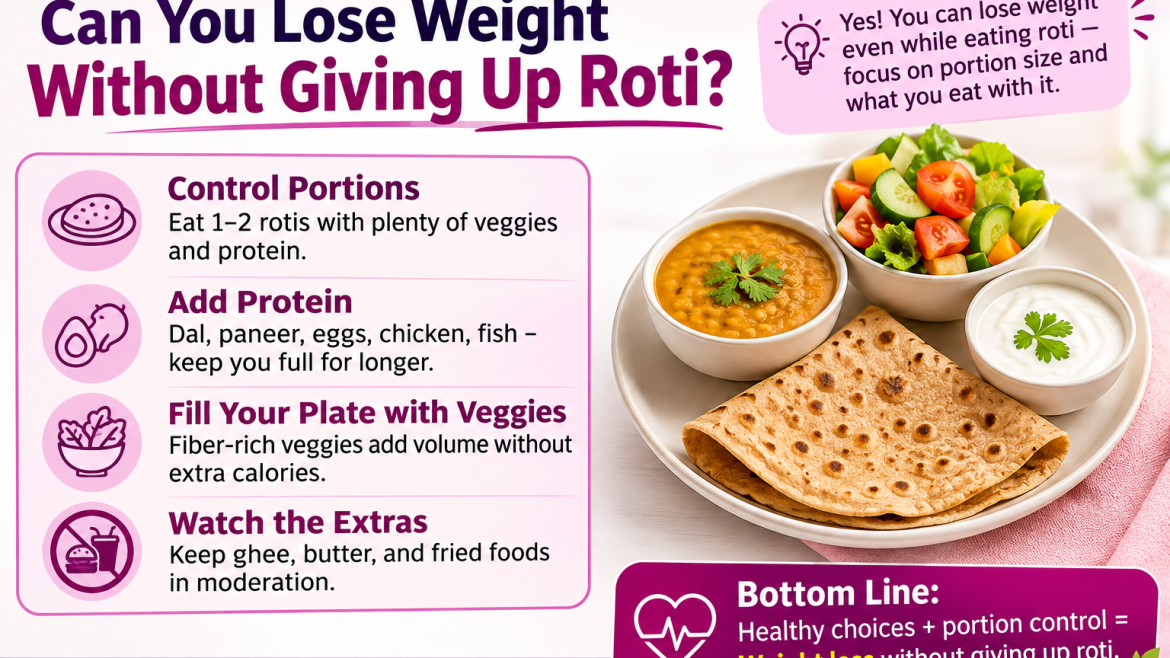
If roti is a regular part of your meals, you don’t necessarily need to remove it from your diet to lose weight. In fact, completely avoiding foods you enjoy can make a diet difficult to maintain.
The goal of weight loss is to create a sustainable calorie deficit while still eating balanced, satisfying meals.
1. Control Your Roti Portions
Roti can absolutely fit into a weight-loss diet. Instead of eating several rotis automatically, start by choosing an appropriate portion for your hunger and overall meal.
A simple approach is to pair 1–2 rotis with plenty of vegetables and a good source of protein rather than making roti the biggest part of the meal.
2. Add Protein to Your Meal
Protein can help you feel fuller and support muscle maintenance during weight loss.
Good options include:
- Dal
- Paneer
- Curd
- Eggs
- Chicken
- Fish
- Soy or tofu
- Chana and other legumes
For example, instead of eating roti with only a small amount of sabzi, try roti + dal + sabzi + curd for a more balanced meal.
3. Don’t Ignore Your Sabzi
Vegetables add volume, fiber, vitamins and minerals without contributing as many calories as many calorie-dense foods.
Fill a significant portion of your plate with vegetables such as spinach, cauliflower, beans, carrots, cabbage, cucumber or other seasonal produce.
4. Watch the Extras
Sometimes the roti isn’t the biggest issue. The calories can quickly add up from ghee, butter, creamy gravies, fried foods, sweets and sugary drinks.
You don’t necessarily need to eliminate these foods, but keeping portions moderate can make weight loss easier.
5. Choose Whole-Wheat Roti When Possible
Whole-wheat roti provides carbohydrates along with some fiber and nutrients. However, switching to whole wheat alone won’t automatically cause weight loss.
Total food intake still matters. A large number of whole-wheat rotis can provide more calories than your body needs.
6. Don’t Skip Meals Just to Eat Roti
You don’t need to starve yourself during the day so you can eat your favorite foods later.
A sustainable eating pattern might look like:
Breakfast: Eggs/curd + fruit
Lunch: 1–2 rotis + dal + sabzi + salad
Snack: Fruit, curd or a small handful of nuts
Dinner: Roti + protein + vegetables
The exact portions should depend on your individual calorie and nutrition needs.