

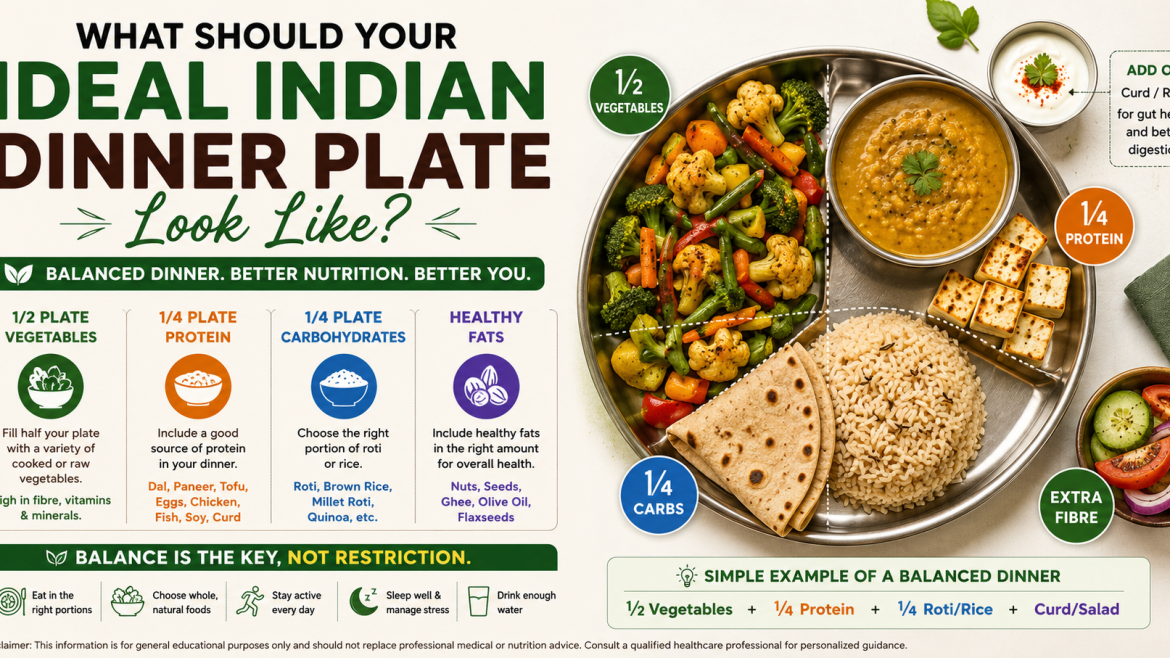
Dinner is often one of the meals where people struggle to decide what to eat for weight loss. Should you eat roti or rice? How much sabzi is enough? Do you need to avoid carbs at night?
The good news is that you don’t need to completely remove roti, rice, or your favourite Indian foods to build a healthy dinner.
Instead, focus on creating a balanced Indian dinner plate that includes protein, vegetables, fibre-rich foods, and an appropriate portion of carbohydrates.
What Should an Ideal Indian Dinner Plate Include?
A simple way to build your dinner plate is to divide it into different food groups rather than focusing only on calories.
1. Fill About Half Your Plate With Vegetables
Vegetables provide fibre, vitamins, minerals, and other nutrients while adding volume to your meal.
Include a variety of cooked or raw vegetables such as:
- Lauki
- Bhindi
- Gobi
- Beans
- Carrots
- Capsicum
- Palak
- Mixed vegetables
- Cucumber and tomato salad
Try to include different colours of vegetables throughout the week.
2. Add a Protein Source
Protein is an important part of a balanced dinner, especially if your goal is healthy weight management.
Good Indian protein options include:
- Dal
- Rajma
- Chole
- Paneer
- Tofu
- Curd
- Eggs
- Chicken
- Fish
- Soy
Including protein can make your meal more satisfying and also supports muscle maintenance.
3. Keep Carbohydrates in the Right Portion
You don’t have to stop eating carbohydrates at dinner.
Roti and rice can both be part of a healthy diet. What matters is the portion size and overall balance of the meal.
Depending on your individual nutritional needs, you may include:
- Roti
- Brown rice
- Regular rice
- Millet-based roti
- Other whole-grain options
Instead of having a large portion of rice or several rotis with very little protein and vegetables, build a balanced plate.
4. Don’t Forget Healthy Fats
Healthy fats are also part of a balanced diet. Foods such as nuts, seeds, and appropriate amounts of cooking oils can contribute healthy fats.
However, remember that fats are calorie-dense, so portion size still matters.
A Simple Indian Dinner Plate Example
Here’s an easy example of a balanced Indian dinner:
½ plate: Mixed vegetables + salad
¼ plate: Dal / paneer / tofu / chicken / fish
¼ plate: 1–2 rotis or an appropriate portion of rice
Optional: Curd or plain yogurt
This is only a general example. Your ideal portions may be different depending on your age, activity level, health status, dietary preferences, and weight-management goals.
What About Roti at Night?
You don’t necessarily need to avoid roti just because it is dinner time.
Roti can be included as part of a balanced meal. The important factors are your overall diet, portion size, and nutritional needs.
Instead of asking “Can I eat roti at night?”, ask:
“Is my overall dinner balanced?”
If your plate contains vegetables, protein, and an appropriate portion of carbohydrates, roti can fit comfortably into many healthy eating patterns.
What About Rice at Dinner?
Rice is not automatically unhealthy or responsible for weight gain.
The quantity and the foods you eat with it matter.
For example, a meal of a sensible portion of rice with dal, vegetables, and curd can be more balanced than a large serving of rice eaten with very little protein or vegetables.
Common Indian Dinner Mistakes
Eating Only Roti and Sabzi
This may leave the meal relatively low in protein. Consider adding dal, curd, paneer, tofu, eggs, or another protein source.
Making Dinner Too Small
Trying to eat as little as possible at night can sometimes leave you hungry later. A balanced meal is usually more sustainable than extreme restriction.
Eating Too Many Fried Foods
Regularly choosing fried snacks, puris, pakoras, or heavily oily dishes can significantly increase calorie intake.
Choose grilled, steamed, roasted, sautéed, or lightly cooked options more often.
Ignoring Portion Sizes
Even nutritious foods can contribute significant calories when eaten in very large quantities.
Focus on balance and appropriate portions rather than labeling foods simply as “good” or “bad.”
How to Make Your Indian Dinner Healthier
You don’t need to completely change your traditional meals. Try making small improvements:
- Add more vegetables
- Include a protein source
- Keep carbohydrate portions appropriate
- Choose whole grains more often
- Limit deep-fried foods
- Include salad where suitable
- Choose water or unsweetened drinks more often
- Eat slowly and pay attention to hunger and fullness