

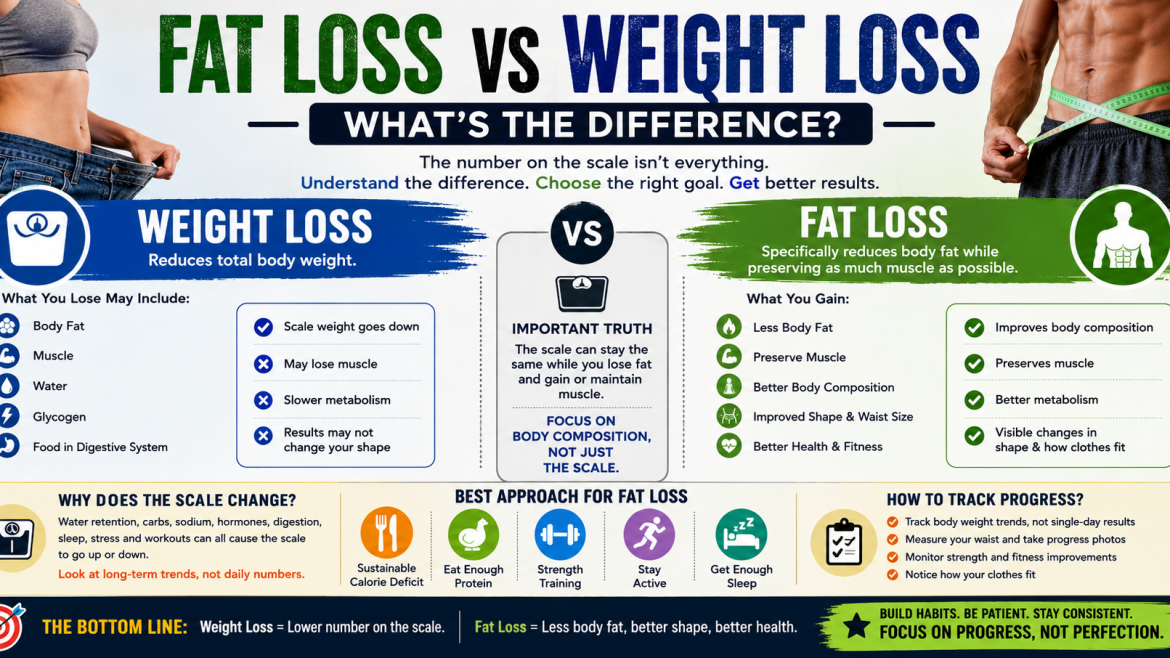
Fat Loss vs Weight Loss — What’s the Difference?
When people decide to get healthier, one of the first goals they often set is to “lose weight.” But weight loss and fat loss are not exactly the same thing.
The number on your weighing scale can change because of fat, muscle, water, glycogen, and even food currently being digested. If your main goal is to improve your body composition and maintain a healthy, strong body, focusing on fat loss rather than simply losing weight can be more useful.
What Is Weight Loss?
Weight loss means a reduction in your total body weight.
Your body weight is made up of several components, including:
- Body fat
- Muscle
- Water
- Glycogen
- Bones
- Organs
- Food and waste in your digestive system
Because of this, losing weight does not automatically mean that you are losing body fat.
For example, someone may see the scale drop quickly after changing their diet. Part of that initial change may be water and glycogen rather than actual body fat.
What Is Fat Loss?
Fat loss specifically refers to reducing the amount of stored body fat.
For many people, this is the more meaningful goal when they want to improve their body shape, waist measurement, fitness, and overall body composition.
A successful fat-loss plan aims to reduce body fat while preserving as much muscle as possible.
Fat Loss vs Weight Loss
| Fat Loss | Weight Loss |
|---|---|
| Specifically targets body fat | Reduces total body weight |
| Focuses on improving body composition | Focuses mainly on the scale |
| Usually aims to preserve muscle | May include muscle loss |
| Progress can be measured through waist and body composition | Progress is commonly measured through body weight |
| Often takes time | Scale changes can happen quickly |
Why Does the Scale Change So Much?
Your body weight naturally fluctuates.
Changes in water retention, carbohydrate intake, sodium consumption, digestion, hormones, and exercise can cause your weight to move up or down from day to day.
That means a small increase on the scale does not necessarily mean that you gained body fat.
Similarly, a sudden drop in weight does not always mean that you lost a large amount of fat.
This is why it can be helpful to look at long-term trends instead of individual weigh-ins.
How to Focus on Fat Loss
If your goal is to lose body fat while maintaining muscle, consider focusing on the following habits.
1. Maintain a Sustainable Calorie Deficit
Fat loss generally requires your body to use more energy than you consume over time.
A moderate, sustainable calorie deficit is usually easier to maintain than an extremely restrictive diet.
The goal should not simply be to eat as little as possible. Your diet should provide enough nutrients and energy to support your daily activities and training.
2. Eat Enough Protein
Protein plays an important role in maintaining and repairing muscle tissue.
Including protein-rich foods in your meals can also help with fullness and make a calorie-controlled diet easier to follow.
Good protein sources include:
- Eggs
- Fish
- Chicken
- Lean meat
- Milk and yogurt
- Paneer
- Tofu
- Beans and lentils
Your individual protein needs can vary depending on factors such as body size, activity level, and goals.
3. Strength Train
Strength training can help you maintain and build muscle while losing body fat.
Exercises such as squats, rows, presses, lunges, and other resistance exercises can be included in a well-designed training routine.
The goal during fat loss is not just to make the scale smaller—it is to improve your body composition.
4. Stay Physically Active
Daily movement also matters.
Walking, cycling, sports, household activities, and other forms of physical activity can increase your overall energy expenditure.
You do not necessarily need to spend hours doing cardio. Building an active lifestyle that you can maintain consistently can be more valuable.
5. Get Enough Sleep
Sleep is an important part of a healthy lifestyle.
Poor sleep can make it harder to manage hunger, energy, recovery, and exercise performance.
Try to maintain a consistent sleep schedule and create a routine that supports adequate rest.
How Should You Measure Fat-Loss Progress?
Don’t rely only on your weighing scale.
You can track several indicators, such as:
Body weight: Look at the trend over several weeks rather than focusing on one day’s number.
Waist measurement: Changes in waist circumference can provide useful information about changes in body composition.
Progress photos: Taking photos under similar conditions can help you notice changes that the scale doesn’t show.
Strength and fitness: Maintaining or improving strength during a fat-loss phase can be a positive sign that you’re preserving muscle.
How your clothes fit: Changes in clothing fit can also provide a practical measure of progress.
Can You Lose Fat Without Losing Weight?
Yes, it is possible.
If you lose body fat while gaining or maintaining muscle, your overall body weight may change very little.
This is sometimes called body recomposition.
For example, someone could lose several centimeters around their waist while their scale weight stays relatively stable.
This is one reason why the number on the scale should not be the only measure of progress.
Is Fast Weight Loss Always Better?
Not necessarily.
Very rapid changes in body weight can include water and muscle loss, especially when someone follows an extremely restrictive diet.
A more sustainable approach generally focuses on gradual progress, adequate nutrition, resistance training, and habits that can be maintained over the long term.
The ideal rate of weight or fat loss varies between individuals.