

Trying to lose weight but not seeing the results you expected? You may be making some common weight loss mistakes without realizing it.
Successful weight management is not simply about eating less or following a strict diet. Your food choices, protein intake, activity level, sleep, stress, and consistency all play an important role. In fact, overly restrictive diets can be difficult to maintain and may make long-term weight management harder.
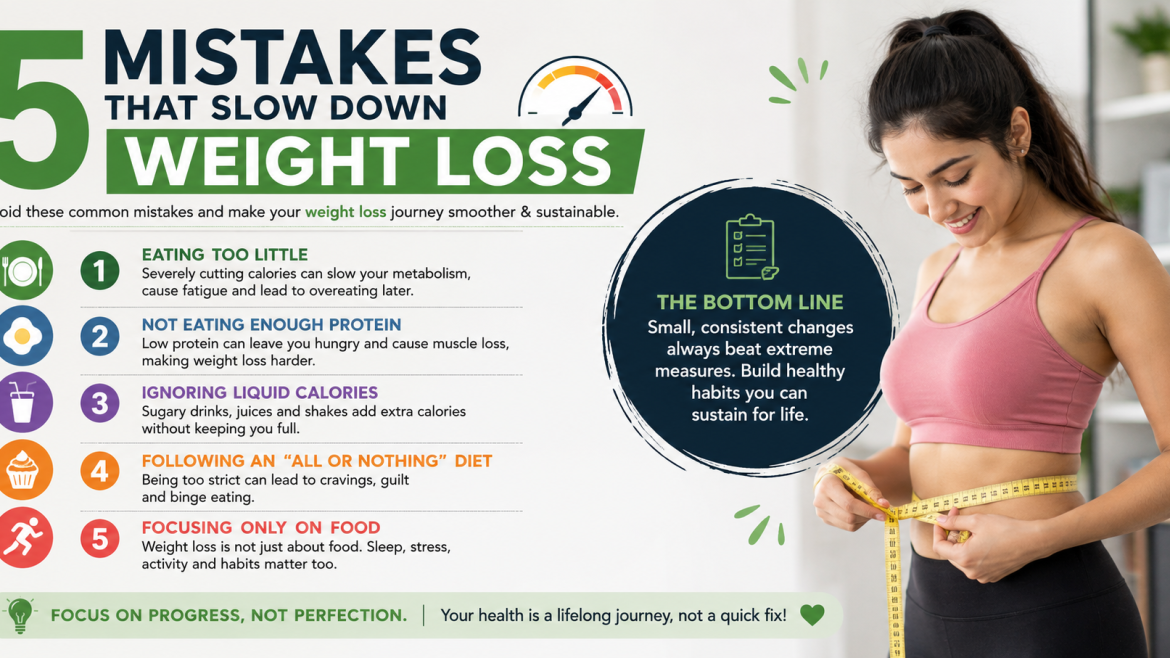
If your weight loss progress has stalled, here are 5 common mistakes that can slow down your weight loss journey and what you can do instead.
1. Eating Too Little
One of the most common weight loss mistakes is drastically reducing food intake. Many people believe that the less they eat, the faster they will lose weight.
While reducing calorie intake can be part of weight loss, eating far too little can lead to excessive hunger, fatigue, poor diet adherence, and loss of muscle mass. Your body may also adapt to a lower calorie intake over time, making continued weight loss more challenging.
What to do instead
Focus on a sustainable calorie deficit rather than extreme restriction. Build balanced meals containing:
- Protein-rich foods
- Vegetables and fruits
- Whole grains and other high-fibre foods
- Healthy fats
- Appropriate portions
The goal should be to eat better, not simply less.
2. Not Eating Enough Protein
Protein is especially important during weight loss because it helps support muscle maintenance and can improve feelings of fullness.
A diet that is low in protein may leave you feeling hungry soon after meals, which can make it harder to maintain your eating plan.
What to do instead
Try including a good source of protein in your meals. Depending on your dietary preferences, options can include:
- Dal and legumes
- Paneer
- Curd or Greek yogurt
- Eggs
- Chicken
- Fish
- Soy and tofu
- Beans and chickpeas
For personalized protein requirements, especially if you have a medical condition, consult a qualified nutrition professional.
3. Ignoring Liquid Calories
Many people carefully monitor their meals but forget about what they drink.
Sugary tea and coffee, soft drinks, sweetened beverages, packaged juices, milkshakes, and calorie-dense smoothies can contribute additional calories without providing the same level of fullness as a balanced meal.
What to do instead
Make water your primary beverage whenever possible. You can also choose unsweetened tea or coffee and other lower-calorie drinks according to your preferences.
You don’t necessarily have to eliminate every enjoyable beverage. The key is to understand how it fits into your overall calorie intake.
4. Following an “All-or-Nothing” Diet
Completely eliminating roti, rice, sweets, desserts, or your favourite foods may seem like a quick way to lose weight.
However, an extremely restrictive diet can be difficult to follow for a long time. Feeling deprived may increase cravings and make it easier to overeat when you eventually break your diet rules.
What to do instead
Choose a flexible and realistic approach.
You can enjoy your favourite foods in sensible portions while focusing most of your diet on nutritious, minimally processed foods.
Consistency is more important than perfection.
A sustainable eating pattern that you can follow for months is generally more useful than a very strict diet that you can follow for only a few days or weeks.
5. Focusing Only on Food
Food is important, but weight management involves more than just diet.
Physical activity, sleep, stress, daily movement, eating habits, and overall lifestyle can all influence your ability to maintain a healthy weight.
For example, poor sleep may affect appetite and food choices, while a sedentary lifestyle can reduce the amount of energy you use throughout the day.
What to do instead
Along with a balanced diet, focus on healthy lifestyle habits such as:
- Regular physical activity
- Strength training to support muscle
- Adequate sleep
- Managing stress
- Staying active throughout the day
- Maintaining consistent eating habits
How to Lose Weight Without Extreme Dieting
Healthy weight loss does not require starving yourself or completely eliminating carbohydrates.
Instead, focus on creating habits that you can maintain over the long term:
Eat balanced meals + prioritize protein + include fibre-rich foods + stay active + sleep well + remain consistent.
Your progress may not always be linear. Body weight can naturally fluctuate because of factors such as water retention, food intake, hormonal changes, and activity levels.
Instead of judging your progress based on a single day’s weight, look at longer-term trends.
Talk to a Nutrition Expert →