

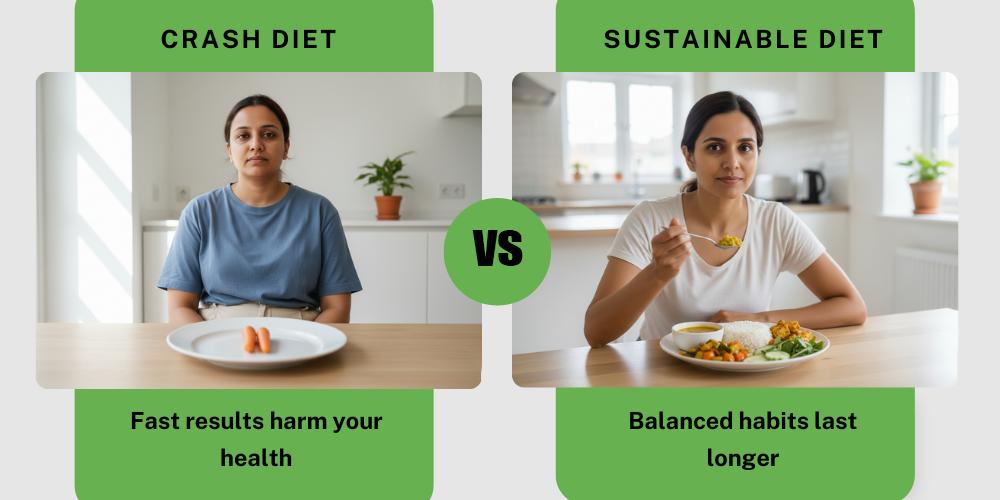
When people want to lose weight quickly, they often turn to extreme diets. Skipping meals, drastically cutting calories, completely avoiding carbohydrates, or following very restrictive food rules may seem like a fast solution.
But while an extreme diet may produce short-term changes on the weighing scale, it can be difficult to maintain and may make long-term weight management harder.
Healthy weight loss is not about eating as little as possible. It is about creating eating habits that are balanced, realistic, and sustainable.
1. Extreme Diets Are Difficult to Maintain
A diet that requires you to completely avoid your favourite foods or follow strict rules every day can quickly become frustrating.
You may be able to follow it for a few days or weeks, but maintaining the same restrictions for months can be challenging.
Once the diet becomes too difficult, many people return to their previous eating habits.
What to do instead
Choose changes that you can realistically continue.
Instead of completely eliminating foods, focus on:
- Better portion control
- More vegetables
- Adequate protein
- Fibre-rich foods
- Regular meals
- Appropriate physical activity
2. Very Restrictive Diets Can Increase Hunger
Eating far too little can leave you feeling hungry, tired, and unsatisfied.
When hunger becomes difficult to manage, cravings may become stronger and it can become harder to follow your planned diet.
This can create a cycle of restriction → cravings → overeating → guilt → restriction again.
A balanced approach can be easier to maintain.
3. Extreme Dieting Can Make You Miss Important Nutrients
Your body needs a variety of nutrients for normal functioning.
If you severely restrict your food choices, you may reduce your intake of important nutrients such as protein, fibre, vitamins, minerals, and healthy fats.
This is one reason a healthy weight-loss diet should include a variety of nutritious foods rather than eliminating entire food groups without a medical reason.
4. Fast Weight Loss Isn’t Always the Same as Fat Loss
A sudden decrease in body weight does not necessarily mean that you have lost only body fat.
Changes in water, glycogen, food intake, and other factors can affect your weight from day to day.
This is why focusing only on the weighing scale can sometimes create unrealistic expectations.
Instead, look at longer-term progress and other indicators such as energy levels, fitness, strength, waist measurements, and how consistently you follow healthy habits.
5. Extreme Rules Can Create an “All-or-Nothing” Mindset
One common problem with restrictive diets is thinking:
“I ate something unhealthy, so my diet is ruined.”
This mindset can turn one unplanned meal into an entire day of overeating.
Healthy eating doesn’t have to be perfect.
If you enjoy a dessert, restaurant meal, or favourite food occasionally, you can simply return to your normal balanced eating pattern at the next meal.
6. You Don’t Need to Completely Avoid Carbohydrates
Roti and rice are common parts of Indian meals, and carbohydrates can be included in a balanced diet.
Instead of completely removing carbohydrates, focus on:
- Appropriate portions
- Whole-grain options when suitable
- Pairing carbohydrates with protein
- Adding plenty of vegetables
- Limiting highly processed and sugary foods
For example, roti + dal + sabzi + curd can be a more balanced meal than eliminating roti completely and then feeling extremely hungry later.
7. Extreme Diets Don’t Teach Sustainable Habits
A temporary diet may tell you what to eat for a few weeks, but long-term weight management requires habits that fit your everyday life.
Learning how to manage portions, build balanced meals, handle cravings, stay active, sleep well, and enjoy food without guilt can be much more useful than repeatedly starting strict diets.
What Should You Do Instead?
Rather than looking for the fastest diet, focus on small changes that you can maintain.
Try these simple habits:
- Include protein in your meals
- Eat plenty of vegetables and fibre-rich foods
- Keep portions appropriate
- Drink enough water
- Stay physically active
- Get adequate sleep
- Allow occasional treats without guilt
- Avoid extreme food restrictions
- Focus on consistency rather than perfection
Can You Lose Weight Without Starving Yourself?
Yes.
Weight loss does not require you to starve yourself or completely eliminate your favourite foods.
A sustainable approach can include the foods you enjoy while creating an overall eating pattern that supports your health and weight-management goals.
The exact calorie and nutrient needs vary from person to person, so there is no single diet that works for everyone.