

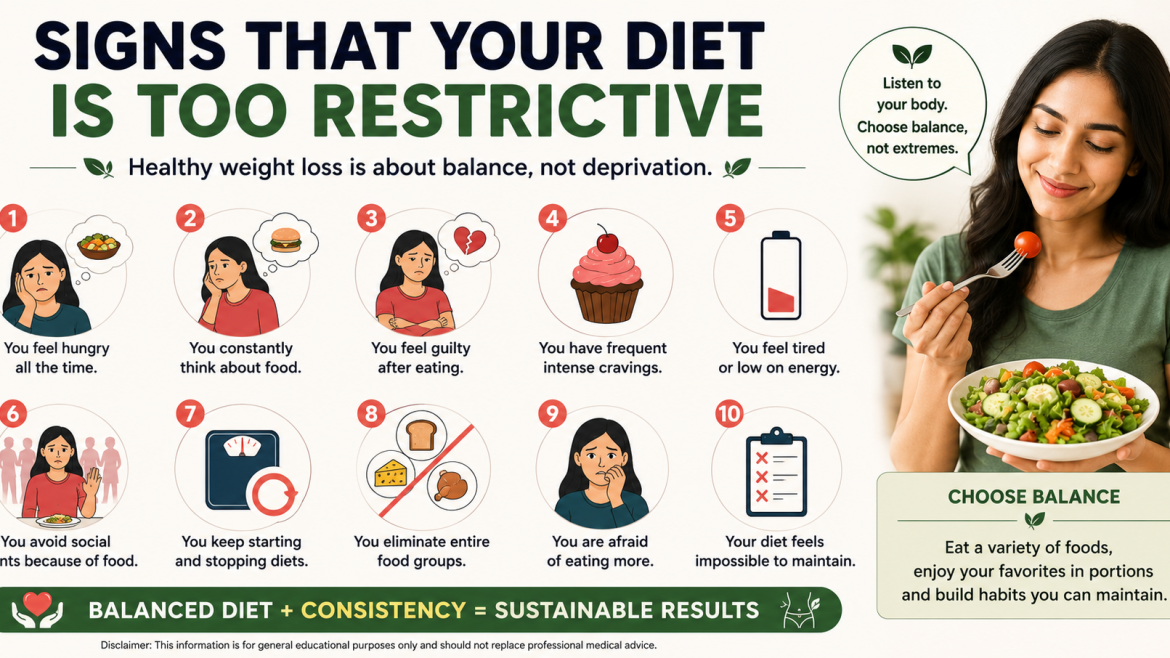
Trying to lose weight often starts with good intentions. You may cut down on certain foods, reduce portions, or follow a strict meal plan. But when a diet becomes too restrictive, it can become difficult to maintain and may affect your relationship with food.
Healthy weight management should not mean constantly feeling hungry or guilty about what you eat.
Here are some common signs that your diet may be too restrictive.
1. You Feel Hungry All the Time
Feeling hungry occasionally is normal. But if you are constantly thinking about food or feeling hungry soon after meals, your diet may not be providing enough food or nutrients.
A sustainable eating plan should provide adequate nutrition while supporting your weight-management goals.
2. You Are Constantly Thinking About Food
If most of your day is spent thinking about what you can or cannot eat, your diet may be too restrictive.
Constantly checking calories, avoiding social meals, or worrying about every food choice can make healthy eating stressful.
3. You Feel Guilty After Eating Certain Foods
Do you feel guilty after eating rice, roti, dessert, or your favourite snack?
Food does not need to be labelled as completely “good” or “bad.” A healthy diet can include a variety of foods in appropriate portions.
4. You Have Frequent Intense Cravings
Strong cravings can happen for many reasons. But if you are constantly restricting foods you enjoy, cravings may become more difficult to manage.
Instead of completely banning favourite foods, consider including them occasionally in sensible portions.
5. You Feel Tired or Low on Energy
Feeling unusually tired, weak, or lacking energy can be a sign that your diet may not be providing adequate energy or nutrients.
If persistent fatigue is affecting your daily life, speak with a healthcare professional rather than simply eating less.
6. You Avoid Social Events Because of Food
If you regularly avoid restaurants, family meals, birthdays, or social gatherings because you are afraid of eating something outside your diet plan, your approach may be becoming too restrictive.
Healthy eating should be flexible enough to fit into real life.
7. You Keep Starting and Stopping Diets
A common cycle looks like this:
Strict diet → cravings → overeating → guilt → new strict diet
If this happens repeatedly, the problem may not be your willpower. Your diet may simply be too difficult to maintain.
8. You Are Eliminating Entire Food Groups Without a Medical Reason
Completely removing carbohydrates, fats, fruits, dairy, or other food groups is not automatically necessary for weight loss.
A balanced diet usually includes a variety of foods that provide different nutrients.
9. You Are Afraid of Eating More
If increasing your food intake slightly creates significant anxiety or fear, it may be useful to reconsider whether your current approach is healthy and sustainable.
Your body needs adequate nutrition to function properly.
10. Your Diet Feels Impossible to Maintain
Ask yourself:
“Can I realistically eat this way for the next 6 months?”
If the answer is no, the diet may be too restrictive.
Long-term weight management is more likely to benefit from habits that fit your lifestyle rather than extreme rules.
What Can You Do Instead?
Instead of making your diet stricter, try making it more balanced.
Focus on:
- Adequate protein
- Vegetables and fruits
- Fibre-rich foods
- Appropriate portions
- Healthy fats
- Suitable carbohydrates
- Regular physical activity
- Adequate sleep
- Flexibility and consistency
You don’t have to eat perfectly every day.
A Sustainable Diet Is Flexible
A healthy eating pattern should allow you to enjoy your favourite foods occasionally without guilt.
For example, you don’t necessarily need to eliminate roti, rice, potatoes, or desserts to manage your weight.
The goal is to understand portions, build balanced meals, and develop habits you can maintain.