
Crash diets have become increasingly popular because they promise rapid weight loss in a short period. From liquid diets and detox cleanses to extremely low-calorie meal plans, these diets often attract people looking for quick results. While you may lose weight initially, much of that weight is water and muscle rather than body fat. Once you return to your normal eating habits, the weight usually comes back.
Healthy weight loss is not about eating less—it’s about eating right. Sustainable weight management requires balanced nutrition, regular physical activity, proper sleep, and healthy lifestyle habits. Instead of relying on temporary solutions, focusing on long-term healthy eating patterns provides lasting results and improves overall well-being.
What Is a Crash Diet?
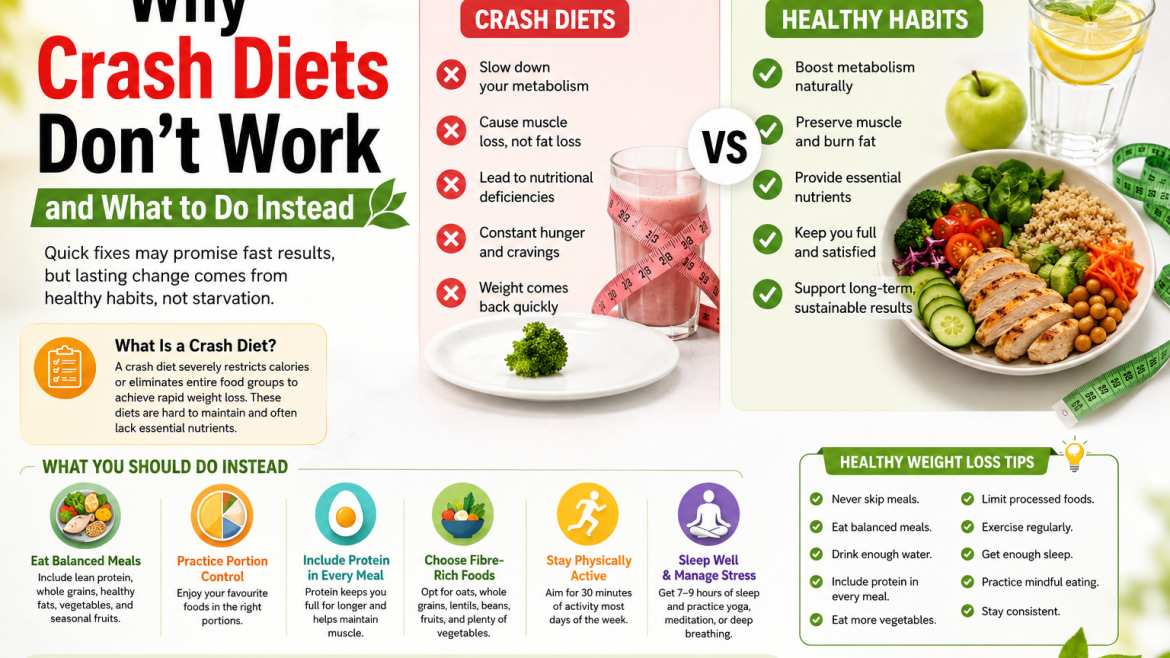
A crash diet is an eating plan that severely restricts calories or eliminates entire food groups to achieve rapid weight loss. These diets usually promise dramatic results within a few days or weeks but are difficult to maintain and often fail to provide essential nutrients.
Common examples include:
- Liquid diets
- Detox cleanses
- Extremely low-calorie diets
- Single-food diets
- No-carbohydrate diets
- Starvation diets
Although they may seem effective at first, they are not a healthy or sustainable approach to weight management.
Why Crash Diets Don’t Work
They Slow Down Your Metabolism
When you consume too few calories, your body enters survival mode to conserve energy. As a result, your metabolism slows down, making it more difficult to burn calories and continue losing weight. A slower metabolism can also make it easier to regain weight once you start eating normally again.
You Lose Muscle Instead of Fat
Healthy weight loss should focus on reducing body fat while preserving lean muscle. Crash diets often cause muscle loss because the body begins using muscle tissue for energy when it doesn’t receive enough nutrients. Losing muscle lowers your metabolic rate, making long-term weight management more challenging.
They Cause Nutritional Deficiencies
Restrictive diets often fail to provide essential nutrients such as protein, fibre, healthy fats, vitamins, and minerals.
This may lead to:
- Weakness
- Fatigue
- Hair fall
- Poor immunity
- Dizziness
- Low energy
- Poor concentration
Over time, nutritional deficiencies can negatively affect your overall health and daily performance.
Constant Hunger and Cravings
Crash diets leave you feeling hungry most of the time because your body isn’t getting enough nourishment. This often increases cravings for sugary and high-calorie foods, making overeating or binge eating more likely.
The Weight Usually Comes Back
One of the biggest problems with crash diets is that they are difficult to maintain. Once normal eating habits return, the lost weight often comes back quickly, sometimes with additional weight gain. This repeated cycle of losing and regaining weight is commonly known as yo-yo dieting.
Health Risks of Crash Diets
Following crash diets repeatedly may increase the risk of:
- Muscle loss
- Slower metabolism
- Nutrient deficiencies
- Hormonal imbalance
- Fatigue
- Digestive problems
- Mood swings
- Weak immunity
People living with diabetes, PCOS, thyroid disorders, kidney disease, or other medical conditions should avoid restrictive diets unless advised by a qualified healthcare professional.
What You Should Do Instead
Instead of following extreme diets, focus on healthy habits that support long-term weight management and overall wellness.
Eat Balanced Meals
Every meal should include:
- Lean protein
- Whole grains
- Healthy fats
- Plenty of vegetables
- Seasonal fruits
Balanced meals provide steady energy, improve satiety, and support healthy metabolism while supplying essential nutrients.
Practice Portion Control
You don’t have to give up your favourite foods to lose weight. Eating appropriate portions allows you to enjoy a variety of foods while maintaining a healthy calorie intake.
Mindful portion control is far more effective than complete food restriction.
Include Protein in Every Meal
Protein helps keep you full for longer, supports muscle maintenance, and reduces unhealthy snacking.
Healthy protein sources include:
- Eggs
- Paneer
- Tofu
- Fish
- Chicken
- Greek yogurt
- Lentils
- Beans
- Soy products
Choose Fibre-Rich Foods
Fibre improves digestion, helps regulate blood sugar levels, and keeps you satisfied for longer.
Include foods such as:
- Oats
- Brown rice
- Whole wheat
- Millets
- Vegetables
- Fruits
- Lentils
- Beans
Eating more fibre naturally supports healthy weight management.
Stay Physically Active
Regular physical activity increases calorie expenditure, improves metabolism, and supports heart health.
Choose activities you enjoy, such as:
- Walking
- Cycling
- Yoga
- Swimming
- Strength training
- Dancing
Aim for at least 30–45 minutes of activity on most days of the week.
Sleep Well and Manage Stress
Poor sleep and chronic stress can increase hunger hormones and trigger cravings for unhealthy foods.
Aim for 7–9 hours of quality sleep every night and practice stress-management techniques such as meditation, yoga, deep breathing, or mindfulness.
Healthy sleep and stress management are just as important as diet and exercise.
Why Personalized Nutrition Is Better
Every person’s nutritional needs are different. Factors such as age, activity level, metabolism, medical history, and lifestyle all influence how your body responds to food.
A personalized nutrition plan helps you:
- Lose fat while preserving muscle
- Meet your nutritional requirements
- Build sustainable eating habits
- Manage medical conditions effectively
- Achieve long-term weight-loss success
Working with a qualified dietitian ensures your nutrition plan is safe, balanced, and tailored specifically to your health goals.
Healthy Weight Loss Tips
Follow these healthy habits every day:
- Never skip meals.
- Eat balanced meals.
- Drink enough water.
- Include protein in every meal.
- Eat plenty of vegetables.
- Choose whole grains over refined carbohydrates.
- Limit processed foods and sugary drinks.
- Exercise regularly.
- Get enough sleep.
- Practice mindful eating.
- Stay consistent with your routine.
Remember, healthy weight loss is a gradual process that delivers lasting results.
Conclusion
Crash diets may promise quick weight loss, but they rarely deliver lasting results. Instead of following restrictive eating plans, focus on balanced nutrition, portion control, regular physical activity, quality sleep, and healthy lifestyle habits.
Healthy weight loss takes time, but it is safer, more sustainable, and much easier to maintain. Rather than looking for shortcuts, build habits that nourish your body and improve your overall health.
Remember, lasting weight loss isn’t about starving yourself—it’s about building healthy habits that you can follow for life.