

When people think about losing weight, they often imagine giving up their favourite foods or following strict diets. However, one of the simplest and most effective ways to achieve healthy and sustainable weight loss is through portion control.
Portion control is not about eating less or starving yourself. Instead, it focuses on eating the right amount of food to meet your body’s nutritional needs while still enjoying a balanced diet. Combined with nutritious food choices and regular physical activity, portion control helps you manage your weight, improve digestion, maintain steady energy levels, and build lifelong healthy eating habits.
Unlike crash diets that promise quick results, portion control offers a practical and sustainable approach to long-term weight management.
What Is Portion Control?
Portion control means consuming the appropriate amount of food based on your body’s energy and nutritional requirements. It is about managing serving sizes rather than completely avoiding certain foods.
Modern lifestyles often encourage overeating. Large restaurant servings, packaged snacks, and distracted eating habits make it easy to consume more calories than the body actually needs.
By learning to recognize healthy portion sizes, you can reduce unnecessary calorie intake while still enjoying a variety of nutritious foods.
Why Portion Control Is Important
Healthy eating isn’t just about choosing nutritious foods—it also involves eating the right quantity.
Practicing portion control provides several important health benefits:
- Supports gradual and sustainable weight loss
- Prevents overeating
- Improves digestion
- Helps regulate blood sugar levels
- Maintains steady energy throughout the day
- Encourages mindful eating habits
- Reduces the risk of obesity, diabetes, and heart disease
Rather than following restrictive diets, portion control allows you to enjoy balanced meals without feeling deprived.
Understanding Healthy Portion Sizes
Learning appropriate serving sizes can make healthy eating much easier.
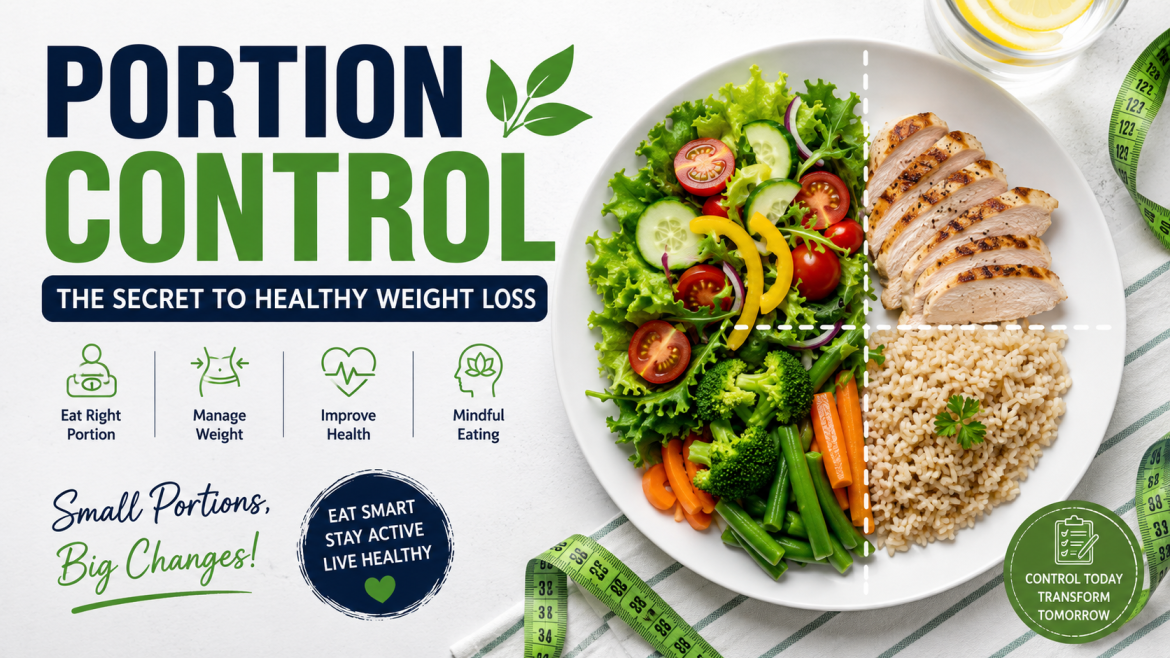
A simple plate method works well for most people:
- Fill half of your plate with vegetables and salads.
- Fill one-quarter of your plate with lean protein such as paneer, tofu, fish, chicken, eggs, or lentils.
- Fill the remaining one-quarter with whole grains like brown rice, whole wheat roti, oats, quinoa, or millets.
- Include a small serving of healthy fats such as nuts, seeds, avocado, or olive oil.
This balanced approach provides essential nutrients while naturally controlling calorie intake.
Eat Slowly and Mindfully
Your brain usually takes around 20 minutes to recognize that your stomach is full. Eating too quickly often results in consuming more food than your body actually needs.
Practicing mindful eating can naturally reduce portion sizes and improve digestion.
Simple mindful eating habits include:
- Chew your food thoroughly.
- Eat without distractions such as television or mobile phones.
- Put your spoon or fork down between bites.
- Enjoy the taste, aroma, and texture of your meals.
- Stop eating when you feel comfortably satisfied instead of overly full.
Mindful eating helps develop a healthier relationship with food and reduces emotional eating.
Choose Smaller Plates and Bowls
Research suggests that plate size influences how much people eat.
Using smaller plates and bowls creates the visual impression of a full meal, making it easier to reduce portion sizes without feeling deprived.
This simple strategy can significantly reduce unnecessary calorie intake over time.
Don’t Skip Meals
Many people skip breakfast or lunch hoping to lose weight faster. Unfortunately, this often leads to excessive hunger later in the day, increasing the likelihood of overeating or choosing unhealthy foods.
Eating balanced meals at regular intervals helps maintain stable blood sugar levels, supports metabolism, and reduces cravings.
Aim for three balanced meals each day, along with healthy snacks if needed.
Increase Your Fibre Intake
Fibre-rich foods help you stay full for longer, improve digestion, and support healthy blood sugar levels.
Excellent sources of dietary fibre include:
- Oats
- Brown rice
- Whole wheat
- Millets
- Lentils
- Beans
- Chickpeas
- Apples
- Pears
- Broccoli
- Carrots
- Green leafy vegetables
Including fibre-rich foods in every meal naturally supports portion control.
Include Protein in Every Meal
Protein helps increase satiety, supports muscle maintenance during weight loss, and reduces unnecessary snacking.
Healthy protein sources include:
- Eggs
- Paneer
- Tofu
- Fish
- Skinless chicken
- Greek yogurt
- Lentils
- Chickpeas
- Soy products
Combining protein with fibre-rich foods creates satisfying meals that help control hunger throughout the day.
Stay Hydrated
Sometimes thirst is mistaken for hunger, leading to unnecessary eating.
Drinking enough water throughout the day supports digestion, metabolism, and appetite control.
Aim to drink approximately 2–3 litres of water daily, depending on your activity level, weather conditions, and individual needs.
Avoid Common Portion Control Mistakes
Many people consume extra calories without realizing it.
Common mistakes include:
- Eating directly from snack packets
- Automatically taking second servings
- Finishing food simply because it is on the plate
- Drinking sugary beverages with meals
- Eating while watching television or using a mobile phone
Being aware of these habits can significantly improve your weight management efforts.
Combine Portion Control with Physical Activity
Portion control works best when combined with regular exercise.
Effective activities include:
- Brisk walking
- Cycling
- Swimming
- Yoga
- Strength training
- Dancing
Aim for 30–45 minutes of physical activity on most days of the week to support healthy weight management and overall fitness.
Why Personalized Nutrition Matters
Every individual has different nutritional requirements based on age, gender, activity level, metabolism, lifestyle, and medical conditions.
A personalized nutrition plan helps you:
- Understand appropriate portion sizes
- Meet your daily nutritional requirements
- Achieve healthy weight loss safely
- Build sustainable eating habits
- Maintain long-term results
Working with a qualified dietitian ensures your meal plan is tailored specifically to your health goals and lifestyle.
Simple Portion Control Tips
Follow these practical habits every day:
- Fill half your plate with vegetables.
- Include protein in every meal.
- Choose whole grains over refined carbohydrates.
- Eat slowly and mindfully.
- Use smaller plates and bowls.
- Avoid sugary drinks.
- Drink enough water throughout the day.
- Stop eating when comfortably full.
- Plan your meals in advance.
- Stay physically active.
Small, consistent changes can lead to significant long-term improvements in your health.
Conclusion
Healthy weight loss is not about starving yourself or eliminating entire food groups. It is about making smarter food choices and eating the right portions to support your body’s nutritional needs.
By practicing portion control, eating balanced meals, staying physically active, and maintaining healthy lifestyle habits, you can achieve sustainable weight loss while still enjoying the foods you love.
Remember, lasting success comes from consistency—not restriction. Small changes in portion sizes today can lead to a healthier, happier future.