

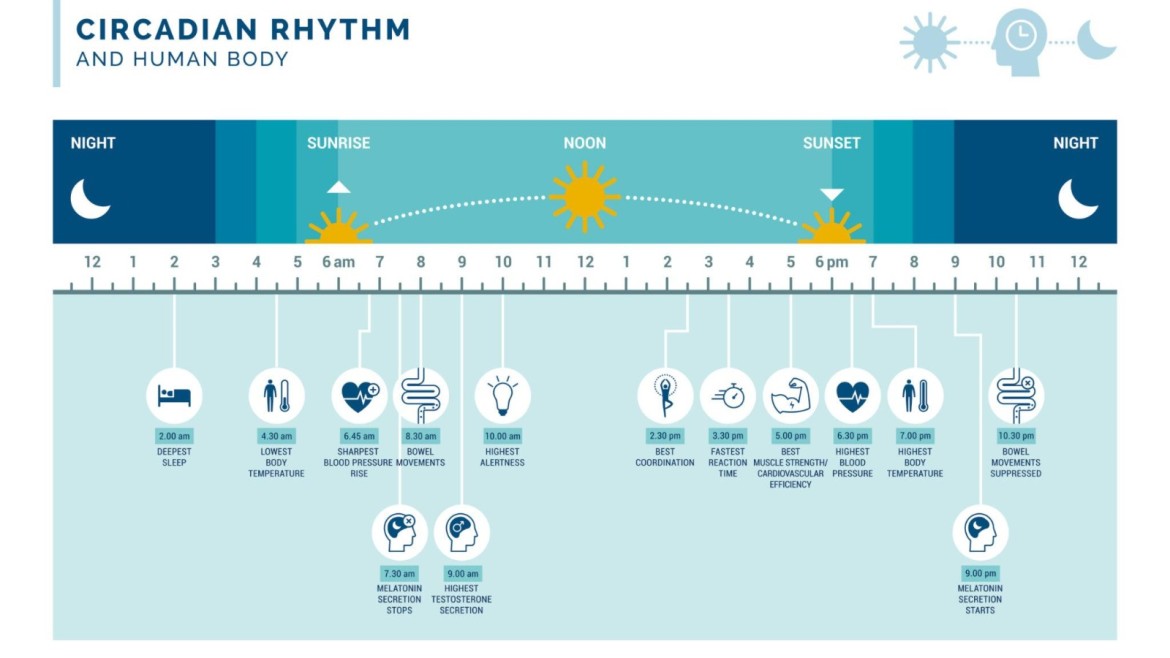
In today’s fast-paced lifestyle, many people experience poor sleep, constant fatigue, weight gain, digestive discomfort, hormonal imbalances, and mood fluctuations. While these issues may appear unrelated, they often share a common underlying cause: disruption of the body’s natural circadian rhythm.
The circadian rhythm is much more than a sleep-wake cycle. It is the body’s internal biological clock that regulates nearly every physiological process, including metabolism, digestion, hormone production, immunity, and cellular repair. Understanding and supporting this natural rhythm can significantly improve overall health and well-being.
What Is Circadian Rhythm?
The word “circadian” comes from the Latin terms circa (around) and diem (day), meaning “about a day.” Circadian rhythm refers to the body’s natural 24-hour cycle that responds primarily to light and darkness.
The master clock is located in a part of the brain called the suprachiasmatic nucleus (SCN). This clock receives information from the eyes and synchronizes various bodily functions to occur at the optimal time of day.
Interestingly, every major organ—including the liver, gut, pancreas, heart, skin, and immune system—has its own internal clock that works in harmony with the master clock.
How Does Circadian Rhythm Work?
Morning sunlight signals the brain that it is time to wake up and become active. This increases alertness, energy levels, and daytime hormone production.
As evening approaches and natural light decreases, the body begins producing melatonin, the hormone responsible for promoting restful sleep. During the night, body temperature drops, metabolism slows, and repair processes become more active.
This daily cycle influences:
- Sleep and wakefulness
- Digestion
- Appetite regulation
- Hormone secretion
- Blood sugar balance
- Liver detoxification
- Immune function
- Cognitive performance
- Mood and emotional stability
Circadian Rhythm and Sleep
One of the most important roles of circadian rhythm is regulating healthy sleep.
Melatonin production typically begins after sunset and peaks during the night. Exposure to artificial light from smartphones, televisions, tablets, and laptops can suppress melatonin production, making it harder to fall asleep.
Signs of Circadian Disruption
- Difficulty falling asleep
- Frequent nighttime awakenings
- Poor sleep quality
- Daytime fatigue
- Brain fog
- Mood disturbances
Quality sleep is essential because the body performs most of its repair, recovery, and regeneration during nighttime rest.
Circadian Rhythm and Metabolism
Research suggests that the body processes food more efficiently during daylight hours and becomes less insulin-sensitive later in the evening.
Late-night eating may contribute to:
- Weight gain
- Insulin resistance
- Fatty liver disease
- Type 2 diabetes
- Increased inflammation
People who consume the majority of their calories earlier in the day often experience better metabolic health and improved weight management.
Circadian Rhythm and Digestion
Digestive activity is naturally strongest during the daytime and weakest late at night.
Eating heavy meals close to bedtime can lead to:
- Bloating
- Acidity
- Gas
- Indigestion
- Constipation
- Reduced nutrient absorption
Maintaining consistent meal timings can help support digestive health and improve gut function.
Circadian Rhythm and Hormonal Balance
Several important hormones follow a circadian pattern:
Cortisol
Often called the “wake-up hormone,” cortisol is highest in the morning and gradually declines throughout the day.
Melatonin
Produced after sunset, melatonin supports sleep and cellular repair.
Growth Hormone
Released during deep sleep, growth hormone is essential for tissue repair, muscle recovery, and healthy aging.
Insulin
Insulin sensitivity is strongest during the daytime and weakest at night.
Disruption of these hormonal rhythms may contribute to fatigue, obesity, mood disorders, fertility challenges, and metabolic diseases.
Circadian Rhythm and Immunity
The immune system also follows a circadian schedule. During sleep, the body increases production of immune cells and anti-inflammatory compounds that help fight infections and repair damaged tissues.
Poor sleep and irregular schedules have been associated with:
- Increased inflammation
- Frequent infections
- Autoimmune disorders
- Delayed healing
- Reduced stress resilience
For individuals living with inflammatory conditions such as arthritis, psoriasis, ankylosing spondylitis, or hidradenitis suppurativa, maintaining a healthy circadian rhythm may provide valuable support in managing inflammation.
Circadian Rhythm and Mental Health
The brain is highly sensitive to circadian disruption.
Studies have linked irregular sleep patterns and inadequate exposure to natural daylight with:
- Anxiety
- Depression
- Irritability
- Mood swings
- Poor concentration
- Emotional instability
A healthy circadian rhythm supports balanced neurotransmitter production, cognitive function, and emotional well-being.
Tips to Improve Your Circadian Rhythm
- Wake up and sleep at the same time daily.
- Get 15–30 minutes of morning sunlight exposure.
- Avoid screens and bright lights before bedtime.
- Eat meals at consistent times each day.
- Avoid heavy meals late at night.
- Limit caffeine intake after afternoon hours.
- Stay physically active during the day.
- Create a dark, cool, and quiet sleep environment.
Final Thoughts
Your circadian rhythm is the foundation of optimal health. When your internal clock is aligned with natural light-dark cycles, your sleep, digestion, hormones, immunity, and mental well-being function more efficiently. Small lifestyle changes that support this biological clock can have a profound impact on long-term health and quality of life.