

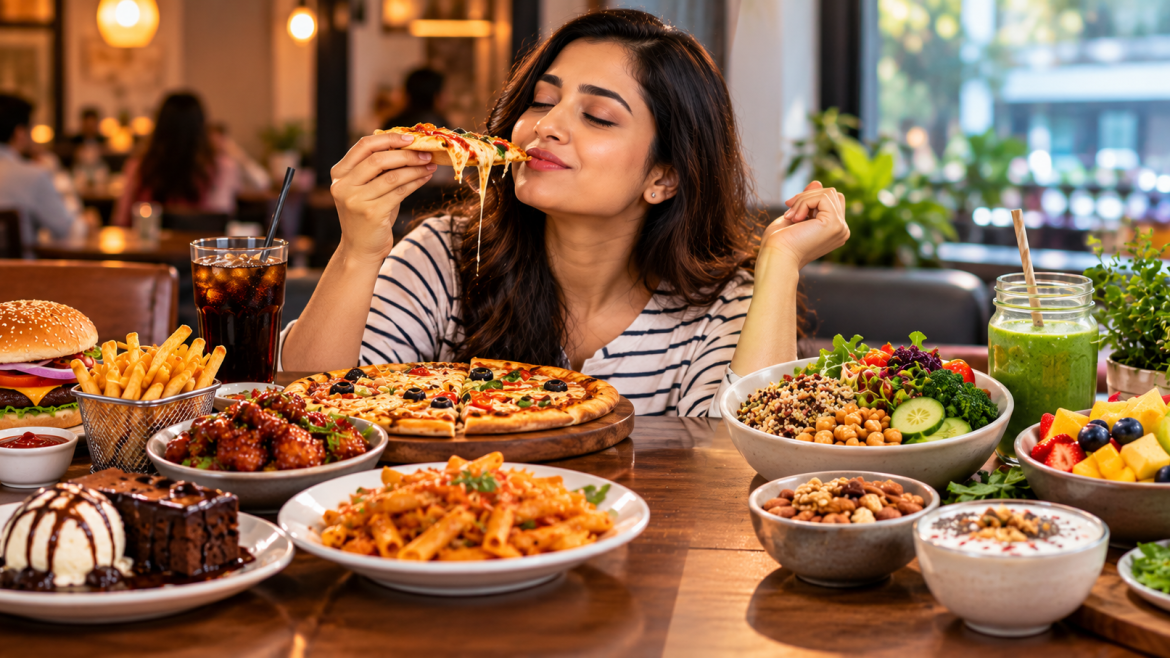
You follow a healthy diet from Monday to Friday, eat balanced meals, avoid unnecessary snacking, and stay consistent with your weight-loss routine. But when the weekend arrives, everything changes.
Restaurant meals, family gatherings, late-night snacks, desserts, and relaxed eating habits become part of your Saturday and Sunday.
By Monday morning, you may notice that your weight has increased or that your progress seems to have stopped.
Can weekend eating really slow down your weight-loss progress?
The answer is yes, in some situations. Weekend eating can influence your overall calorie intake, meal patterns, and consistency. However, enjoying your favourite foods occasionally does not automatically cause weight gain.
Understanding how weekend habits affect your weekly eating pattern can help you manage weight without following an overly restrictive diet.
1. Why Weekend Eating Can Affect Weight Loss
Weight management is influenced by your overall energy intake and expenditure over time, not just what you eat on individual weekdays.
You might maintain a moderate calorie deficit throughout the week but consume substantially more calories over the weekend.
For example, consider this hypothetical situation:
- Monday to Friday: 300-calorie daily deficit
- Total weekday deficit: 1,500 calories
- Saturday: 800 calories above maintenance
- Sunday: 800 calories above maintenance
The weekend surplus would total 1,600 calories, slightly exceeding the weekday deficit.
These figures are only an illustration. Actual calorie needs and weight changes vary between individuals.
The key lesson: Consistency across the entire week matters more than following a strict diet for only five days.
2. Restaurant Meals Can Contain More Calories Than Expected
Eating out is a common weekend activity.
Restaurant meals can sometimes contain more calories than similar homemade meals because of:
- Larger serving sizes
- Additional cooking oil or butter
- Cream-based gravies
- Fried starters
- Sugary beverages
- Desserts
- Extra sauces and dressings
For example, a restaurant meal consisting of paneer butter masala, butter naan, a sweetened beverage, and dessert may provide considerably more calories than a simple homemade meal.
What to do instead
You don’t need to stop eating at restaurants.
Try these practical strategies:
- Choose dishes you genuinely enjoy.
- Include vegetables and protein where possible.
- Pay attention to portion sizes.
- Share large dishes when appropriate.
- Choose water or unsweetened drinks more often.
- Stop eating when comfortably satisfied.
The goal is to enjoy your meal without feeling that every restaurant visit must become an unlimited eating occasion.
3. Weekend Snacking Can Add Up
Many people follow structured meal timings during working days but snack more frequently on weekends.
Watching movies, meeting friends, travelling, or spending time at home may encourage eating even when you are not particularly hungry.
Common examples include:
- Chips
- Biscuits
- Namkeen
- Sweets
- Chocolates
- Fried snacks
- Sweetened beverages
Individual snacks are not necessarily a problem, but repeated snacking can increase your overall calorie intake.
What to do instead
Keep convenient, nutritious snacks available, such as roasted chana, plain curd, fruit, nuts, sprouts chaat, or boiled eggs.
You can still enjoy occasional treats without making every weekend snack an unplanned eating habit.
4. Skipping Meals Before a Cheat Meal May Backfire
Some people skip breakfast or lunch because they plan to eat a large dinner.
For example:
“I’m going out tonight, so I won’t eat anything all day.”
This strategy can leave you extremely hungry by evening.
For some people, intense hunger makes it more difficult to recognize fullness and manage portions.
A better approach
Eat balanced meals throughout the day.
If you’re going out for dinner, consider having a normal breakfast and a lighter but satisfying lunch containing protein, vegetables, and other nutritious foods.
Avoid using starvation as a way to compensate for a restaurant meal.
5. Sugary Drinks and Alcohol Can Increase Calorie Intake
Weekend celebrations often include beverages that contribute calories without necessarily providing much fullness.
Examples include:
- Sweetened mocktails
- Soft drinks
- Packaged juices
- Sweetened coffee drinks
- Milkshakes
- Alcoholic beverages
These drinks can increase the total energy content of a meal.
What to do instead
Choose water or unsweetened beverages more often, and be mindful of how frequently you consume calorie-containing drinks.
You do not need to make every drink completely calorie-free, but awareness can help you make informed choices.
6. Weekend Sleep Patterns Can Influence Hunger
Weekends sometimes involve staying awake late, sleeping at irregular times, or getting insufficient sleep.
Poor sleep can affect appetite regulation and may increase hunger or cravings in some people.
It may also make it harder to maintain regular physical activity and meal routines.
What to do instead
Try to maintain reasonably consistent sleep and waking times.
Adequate sleep supports overall health and can make healthy lifestyle habits easier to maintain.
7. Less Physical Activity During Weekends
Some people are physically active during weekdays because of commuting, walking, work routines, or scheduled exercise.
However, weekends may involve more sitting, watching television, or relaxing indoors.
Reduced movement can influence overall energy expenditure.
Simple ways to stay active
- Go for a morning walk.
- Take a family walk after meals.
- Enjoy cycling or dancing.
- Participate in outdoor activities.
- Continue your usual exercise routine when practical.
Remember that exercise should support your health, not serve as punishment for eating.
8. The Problem With the Cheat Day Mentality
The idea of a weekly cheat day can create an unhelpful cycle for some people.
They may follow a very restrictive diet throughout the week and then feel encouraged to eat excessive amounts of food during the weekend.
This can lead to guilt, compensation, and repeated restriction.
A more sustainable approach
Instead of dividing foods into strictly “good” and “bad” categories, build flexibility into your normal eating pattern.
You can enjoy pizza, sweets, restaurant meals, or your favourite Indian dishes occasionally while maintaining balanced habits overall.
A sustainable weight-loss diet should fit into your life, including weekends.
9. Why Your Weight May Increase on Monday Morning
A higher number on the weighing scale after the weekend does not always mean you gained body fat.
Short-term weight fluctuations can occur because of:
- Increased sodium intake
- Higher carbohydrate intake
- Temporary water retention
- Food still being digested
- Changes in bowel movements
- Menstrual-cycle-related changes
For example, eating a salty restaurant meal may temporarily increase water retention.
Instead of panicking about a single weigh-in, observe weight trends over time under similar conditions.
10. How to Enjoy Weekends Without Slowing Weight Loss
You don’t need to follow a perfect diet seven days a week.
Here are practical habits that may help:
Plan ahead: If you know you’ll be eating out, consider your food choices without skipping meals.
Prioritize protein: Include dal, paneer, tofu, eggs, chicken, fish, or other suitable protein sources.
Add vegetables: Try including vegetables with your main meals.
Be portion-aware: Enjoy your favourite foods without assuming every meal needs to be oversized.
Stay hydrated: Drink water regularly throughout the day.
Keep moving: Continue enjoyable physical activity.
Avoid guilt: One meal does not determine your long-term progress.
Return to your routine: After a celebration or restaurant meal, resume your usual balanced eating pattern rather than compensating through extreme restriction.
11. A Simple Weekend Indian Meal Plan
This is a general example of how you can structure a balanced weekend while leaving room for flexibility.
Breakfast
Vegetable besan chilla with plain curd
Mid-Morning
Whole fruit with a small portion of nuts
Lunch
Roti, dal, seasonal sabzi, salad, and curd
Evening Snack
Roasted chana or sprouts chaat
Dinner
A balanced homemade meal or a restaurant meal of your choice with attention to portions and overall meal balance
Individual food quantities should be adjusted according to your nutritional needs, activity, health, and preferences.
12. What If You Overeat During the Weekend?
Occasional overeating happens.
It does not mean your weight-loss journey has failed.
Avoid trying to compensate by skipping several meals, exercising excessively, or following an extreme detox diet.
Instead:
- Return to your regular meal routine.
- Drink adequate water.
- Include balanced meals.
- Continue normal physical activity.
- Get sufficient sleep.
- Focus on long-term consistency.
Progress is shaped by your overall habits, not one meal or one weekend.