

Introduction
Polycystic Ovary Syndrome (PCOS) is a hormonal condition that can affect menstrual cycles, skin, hair growth, and metabolic health. Nutrition is one part of overall well-being, and balanced meals can help support general health.
Many people wonder whether there is a special dinner plate for PCOS. The truth is that there is no universal PCOS diet. Individual nutritional needs, food preferences, culture, activity levels, and health circumstances all matter.
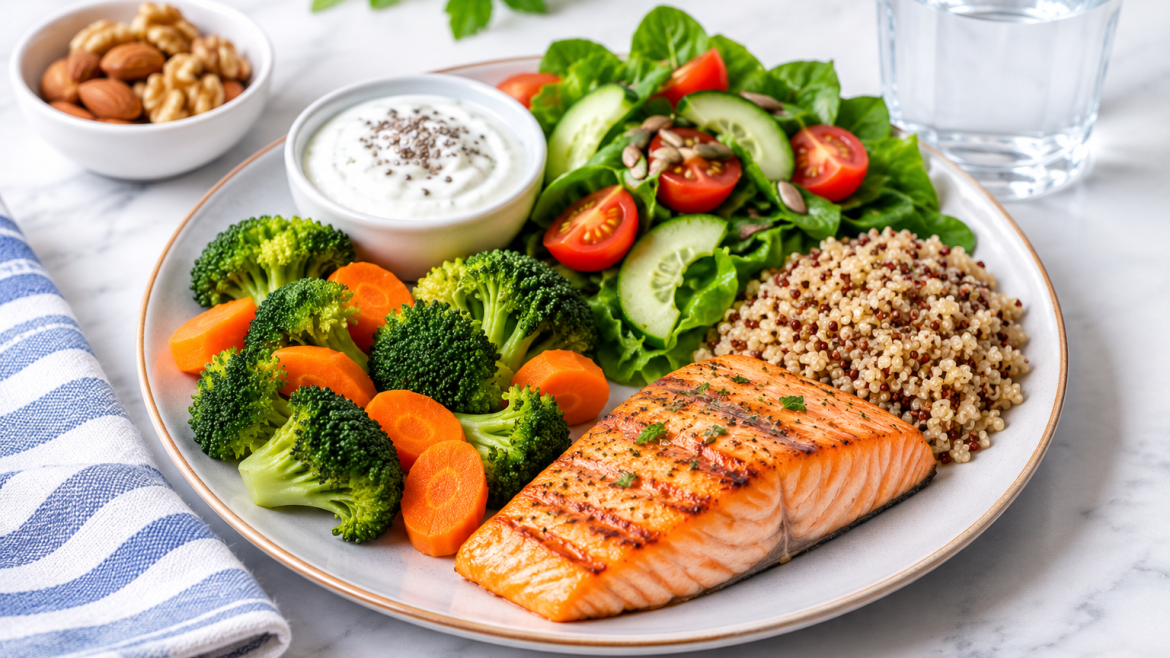
A useful starting point is to build a varied dinner with vegetables, protein, carbohydrates, and healthy fats.
1. Include Plenty of Vegetables
Vegetables provide fibre, vitamins, minerals, and other nutrients that support overall health.
Try including different colours and varieties in your dinner.
Examples include:
- Spinach and other leafy greens.
- Carrots and beetroot.
- Broccoli and cauliflower.
- Beans and peas.
- Capsicum and tomatoes.
- Seasonal vegetables.
You can prepare them as sabzi, steamed vegetables, salads, soups, or mixed vegetable dishes.
2. Add a Source of Protein
Protein is important for many body functions, including maintaining and repairing tissues.
Include a protein-rich food that suits your preferences.
Some options are:
- Dal and other lentils.
- Chickpeas and kidney beans.
- Paneer.
- Tofu.
- Eggs.
- Fish or chicken.
- Plain yoghurt or curd.
Combining protein with other food groups can make a meal varied and satisfying.
3. Choose Fibre-Rich Carbohydrates
Carbohydrates provide energy and can be part of a balanced PCOS-friendly eating pattern.
Rather than avoiding carbohydrates, choose a variety of sources according to your needs and preferences.
Examples include:
- Whole-wheat roti.
- Brown or regular rice.
- Oats.
- Millets.
- Quinoa.
- Whole-grain bread.
- Sweet potatoes.
Portion needs differ from person to person. There is no requirement to eliminate rice, roti, or other familiar foods.
4. Include Healthy Fats
Healthy fats support normal body functions and help the body absorb certain vitamins.
Food sources include:
- Nuts such as almonds and walnuts.
- Seeds such as flaxseeds and chia seeds.
- Olive oil.
- Groundnut oil.
- Avocado.
Use fats as part of an overall varied meal rather than treating any single food as a solution for PCOS.
5. Build a Balanced Dinner Plate
A simple way to plan dinner is to include several food groups in the same meal.
For example, an Indian-style dinner could include:
Vegetables: Mixed vegetable sabzi or a fresh salad.
Protein: Dal, paneer, tofu, eggs, or another preferred protein source.
Carbohydrates: Roti, rice, or another grain.
Healthy fats: Nuts, seeds, or a suitable cooking oil.
This is a flexible example, not a strict formula. The amount of each food can vary according to individual nutritional needs.
6. Simple PCOS-Friendly Dinner Ideas
Here are some practical meal combinations:
Option 1: Traditional Indian Dinner
- Whole-wheat roti.
- Mixed vegetable sabzi.
- Dal.
- Plain curd.
Option 2: Vegetarian Dinner
- Paneer or tofu bhurji.
- Roti or rice.
- Cucumber and tomato salad.
Option 3: Protein-Rich Dinner
- Grilled fish or chicken, if preferred.
- Cooked vegetables.
- Rice or another grain.
Option 4: Simple One-Bowl Meal
- Chickpeas or kidney beans.
- Rice or quinoa.
- Mixed vegetables.
- Yoghurt dressing.
Option 5: Light but Satisfying Dinner
- Vegetable soup.
- Paneer or tofu.
- Whole-grain toast.
These are meal ideas, not a prescribed diet. Choose combinations that are enjoyable and provide enough nourishment.
7. Do You Need to Avoid Certain Foods With PCOS?
There is no universal list of foods that everyone with PCOS must avoid.
Carbohydrates, dairy, rice, and other commonly questioned foods do not automatically need to be removed from the diet.
A balanced and flexible approach is generally more practical than strict food restrictions. If you have specific allergies, intolerances, or medical needs, a qualified healthcare professional or registered dietitian can help you make suitable choices.
8. Make Dinner a Sustainable Habit
Healthy eating does not need to be complicated or expensive.
A few practical habits can make dinner planning easier:
- Use seasonal vegetables.
- Include protein-rich foods regularly.
- Choose a variety of grains and carbohydrates.
- Prepare simple meals at home when convenient.
- Keep meals enjoyable and culturally familiar.
- Avoid skipping meals to compensate for what you have eaten earlier.
Consistency and adequate nourishment matter more than following a perfect-looking plate every day.