

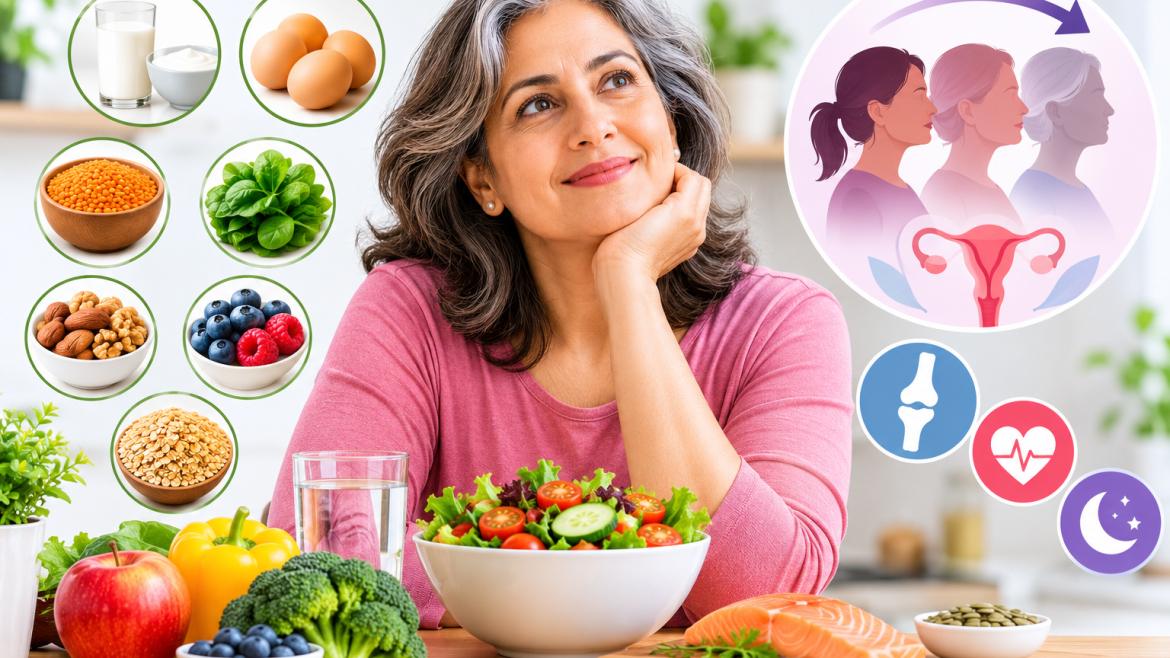
Perimenopause is the natural transition leading up to menopause. During this stage, hormone levels, particularly estrogen, fluctuate, and menstrual cycles may become irregular. Some women also experience changes in sleep, mood, energy levels, and overall wellbeing.
Nutrition plays an important role in supporting health during this transition. Although no single food or diet can prevent all perimenopause symptoms, making balanced food choices can help support bone health, muscle maintenance, heart health, and digestive wellness.
So, what should you start changing in your diet during perimenopause? Let’s explore some practical nutrition tips.
1. Include Protein in Your Daily Meals
Protein supports muscle maintenance, tissue repair, and many essential body functions.
As women get older, maintaining muscle health becomes increasingly important. Including protein-rich foods in regular meals can help support this process.
Good protein sources include:
- Eggs
- Milk and curd
- Paneer
- Lentils and dal
- Chickpeas and beans
- Tofu and soy products
- Fish and lean meat
- Nuts and seeds
Try to include a suitable protein source in your main meals rather than relying on just one meal for your daily intake.
2. Focus on Calcium-Rich Foods
Calcium is essential for maintaining strong bones. Changes in estrogen levels during the menopausal transition can contribute to bone loss, making bone health an important nutritional consideration.
Include calcium-rich foods such as:
- Milk
- Curd and yogurt
- Paneer
- Calcium-fortified plant-based milk
- Ragi
- Sesame seeds
- Certain green leafy vegetables
Your calcium requirements depend on your age and individual health needs. A healthcare professional can help you understand whether your diet provides enough.
3. Pay Attention to Vitamin D
Vitamin D helps the body absorb calcium and supports normal bone and muscle function.
Sources of vitamin D include:
- Sunlight exposure
- Fortified foods
- Egg yolks
- Fatty fish
- Vitamin D supplements when recommended
Vitamin D deficiency can occur for several reasons. If you are concerned about your vitamin D levels, discuss testing and supplementation with a healthcare professional.
4. Add More Fibre to Your Diet
Fibre supports digestive health and helps maintain normal bowel function. Fibre-rich foods can also contribute to heart health and help maintain steady energy throughout the day.
Include foods such as:
- Oats
- Whole wheat
- Brown rice
- Fruits
- Vegetables
- Lentils
- Beans
- Seeds
Increase fibre gradually and drink enough fluids to support digestion.
5. Choose Healthy Fats
Healthy fats provide energy and help the body absorb certain vitamins.
Include sources of unsaturated fats in your meals, such as:
- Almonds and walnuts
- Flaxseeds and chia seeds
- Olive oil
- Groundnut oil
- Avocados
- Fatty fish
Try to balance your fat intake and limit excessive consumption of foods high in trans fats and saturated fats.
6. Eat a Variety of Fruits and Vegetables
Fruits and vegetables provide vitamins, minerals, fibre, and other beneficial plant compounds.
Try including different colours and varieties in your daily meals.
Some useful options include:
- Spinach
- Broccoli
- Carrots
- Tomatoes
- Citrus fruits
- Berries
- Guava
- Papaya
- Seasonal vegetables
A varied selection helps provide a broader range of nutrients and supports overall health.
7. Stay Hydrated Throughout the Day
Drinking enough fluids supports digestion, circulation, and normal body functions.
Some women experience changes in temperature regulation or night sweats during perimenopause. Staying hydrated can help replace fluids lost through sweating, although it does not necessarily prevent hot flashes.
Helpful habits include:
- Drinking water regularly.
- Including water-rich fruits and vegetables.
- Keeping water accessible during the day.
- Drinking additional fluids when needed during hot weather or physical activity.
Individual fluid requirements can vary depending on health, activity, and climate.
8. Review Your Caffeine and Alcohol Habits
Some women notice that caffeine or alcohol makes certain symptoms, such as sleep disturbances or hot flashes, more noticeable.
However, triggers differ from person to person.
Consider observing whether particular drinks affect your sleep or comfort. If you notice a connection, discuss suitable changes with a healthcare professional.
Reducing excessive caffeine and avoiding alcohol can also support broader health goals.
9. Include Foods That Support Heart Health
Heart health deserves attention during the menopausal transition because cardiovascular risk factors can change with age.
A balanced eating pattern can include:
- Whole grains
- Fruits and vegetables
- Beans and lentils
- Nuts and seeds
- Fish
- Unsaturated vegetable oils
Limiting excessive salt, highly processed foods, and foods high in saturated fats can also support heart health.
Regular physical activity, adequate sleep, and routine health check-ups are important parts of overall cardiovascular wellbeing.
10. Support Gut Health With a Balanced Diet
Digestive habits may change for different reasons during midlife. Fibre-rich foods and a varied diet can help support normal digestive function.
Consider including:
- Curd with live cultures
- Fibre-rich fruits
- Vegetables
- Whole grains
- Lentils and beans
- Adequate fluids
Fermented foods such as curd can be part of a balanced diet, although they are not a guaranteed treatment for digestive problems or hormonal symptoms.
11. Avoid Depending on Unverified Supplements
You may come across supplements advertised for hormonal balance, hot flashes, sleep, or menopause support.
However, supplements do not all have strong evidence of effectiveness, and some may interact with medicines or cause side effects.
Before taking calcium, vitamin D, herbal products, or other supplements, discuss your needs with a qualified healthcare professional.
A balanced diet should remain the foundation of nutritional care.
12. Build a Sustainable Daily Eating Routine
You do not need to completely change your diet overnight. Small, practical adjustments can help create healthier eating habits.
Here is an example of a balanced daily meal pattern:
Breakfast: Vegetable oats, milk, or eggs with whole-grain toast.
Mid-Morning: Seasonal fruit or a small serving of nuts.
Lunch: Whole wheat roti or rice, dal, vegetables, and curd.
Evening Snack: Roasted chickpeas, sprouts, or fruit.
Dinner: Paneer, tofu, fish, or lentils with vegetables and whole grains.
This is only an illustrative meal pattern. Food choices and portion sizes should be adjusted according to individual nutritional needs, preferences, and medical conditions.
Common Nutrition Mistakes to Avoid During Perimenopause
Some common mistakes can make it harder to maintain a balanced eating pattern.
Avoid:
- Skipping meals regularly.
- Ignoring protein-rich foods.
- Eating too little calcium-rich food.
- Relying heavily on processed snacks.
- Drinking too little water.
- Taking supplements without professional guidance.
- Following restrictive diets based on online claims.
- Expecting one food to balance hormones or eliminate symptoms.
A varied and sustainable eating pattern is generally more useful than following extreme dietary rules.