

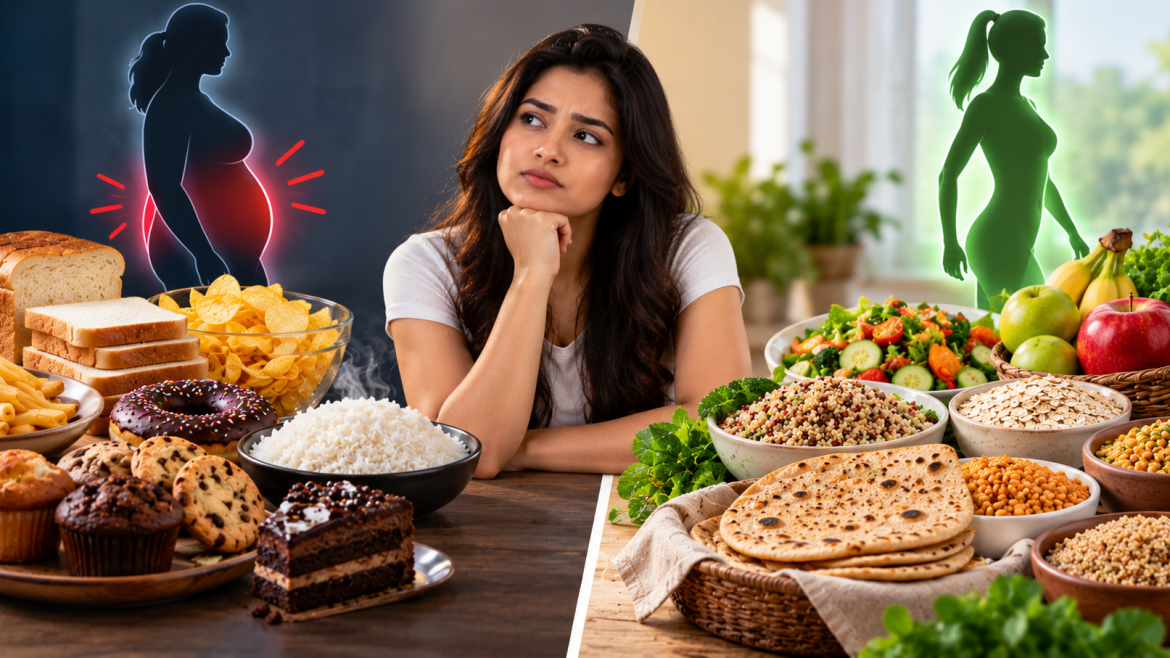
“Weight loss karna hai to carbs band kar do.” This is one of the most common diet claims. Rice, roti, potatoes, bread, and even fruit are sometimes blamed for weight gain.
But are carbohydrates really bad for weight loss?
Short answer: Myth.
Carbohydrates do not automatically cause weight gain. Successful weight management depends more on your overall calorie intake, portion sizes, food quality, activity level, sleep, and consistency than on eliminating one nutrient.
What Are Carbohydrates?
Carbohydrates are one of the body’s main sources of energy. They are found in many everyday foods, including:
- Roti
- Rice
- Oats
- Fruits
- Vegetables
- Potatoes
- Dal and legumes
- Millets
- Bread
- Cereals
Not all carbohydrate-containing foods have the same nutritional value.
Whole grains, fruits, vegetables, and legumes can provide important nutrients and fiber, while highly refined foods may provide less fiber and can be easier to over consume.
Why Do Carbs Get Blamed for Weight Gain?
Many foods that are easy to overeat contain carbohydrates along with significant amounts of fat, sugar, or both.
Examples include:
- Cakes
- Cookies
- Pastries
- Chips
- Sugary drinks
- Sweets
- Fried snacks
If these foods contribute to excessive calorie intake, weight gain can occur.
But that doesn’t mean a bowl of dal, a piece of fruit, or an appropriate portion of rice has the same nutritional effect as a pastry or sugary drink.
Can You Eat Carbs and Still Lose Weight?
Yes.
Carbohydrates can be included in a weight-loss diet when portions and total energy intake are appropriate.
Instead of eliminating carbohydrates, focus on building a balanced meal:
½ plate vegetables + ¼ protein + ¼ carbohydrate-rich foods
For example:
Roti + Dal + Sabzi + Curd
or
Rice + Paneer/Chicken + Vegetables + Salad
The ideal portions vary between individuals.
Choose High-Fibre Carbs More Often
Fibre-rich foods can help make meals more satisfying and contribute to digestive health.
Consider foods such as:
- Whole-wheat roti
- Oats
- Dal
- Rajma
- Chole
- Whole fruits
- Vegetables
- Whole grains
- Millets
This doesn’t mean refined carbohydrates can never be eaten. Your overall dietary pattern matters more than labeling individual foods as completely “good” or “bad.”
Pair Carbs With Protein
Instead of eating carbohydrate-rich foods alone, combine them with a suitable protein source.
For example:
Fruit + Curd
Roti + Paneer
Rice + Dal
Toast + Eggs
Poha + Sprouts
Protein can make meals more satisfying and is important for maintaining muscle, particularly during weight loss.
Portion Size Still Matters
Even nutritious foods contain calories.
Eating very large portions of roti, rice, oats, or other carbohydrate-rich foods can make it harder to maintain the calorie intake needed for weight loss.
You don’t necessarily need to remove these foods.
Instead, consider:
Quality + Quantity + Meal Balance
Do Low-Carb Diets Work?
Some people can lose weight using a lower-carbohydrate eating pattern.
But that does not prove carbohydrates themselves are inherently fattening.
Different dietary approaches can support weight loss when they help create an appropriate energy deficit and can be maintained over time.
The best approach is generally one that meets your nutritional needs and is sustainable for you.
Should You Stop Eating Roti and Rice?
For most people trying to lose weight, completely eliminating roti or rice is unnecessary.
You can instead:
- Control portions
- Include adequate protein
- Add plenty of vegetables
- Choose higher-fiber foods more often
- Reduce highly processed snacks
- Limit sugary beverages
- Stay physically active
This can be much easier to maintain than an extremely restrictive diet.
What About Fruit?
Fruit contains carbohydrates and naturally occurring sugars, but whole fruit also provides fiber, vitamins, minerals, and other nutrients.
Whole fruit does not need to be automatically removed from a weight-loss diet.
Fruit juice and whole fruit are also not nutritionally identical because juice generally contains less fiber and can be consumed much more quickly.
Myth vs Fact
MYTH:
“Carbs make you fat, so you must stop eating them to lose weight.”
FACT:
Carbohydrates can be part of a healthy weight-loss diet. Total calorie intake, portions, food quality, protein, fiber, physical activity, and consistency matter.
Frequently Asked Questions
Are carbs bad for weight loss?
No. Carbohydrates themselves are not automatically bad for weight loss. Their type, quantity, and your overall calorie intake matter.
Can I eat roti while losing weight?
Yes. Roti can be included in a balanced weight-loss diet in an appropriate portion.
Can I eat rice during weight loss?
Yes. Rice does not necessarily need to be eliminated. Pay attention to portion size and combine it with protein and vegetables.
Should I avoid carbs at dinner?
There is no universal requirement to eliminate carbohydrates at dinner. Your total daily diet and individual needs matter more.
Which carbs are better for weight loss?
Fibre-rich foods such as whole grains, legumes, vegetables, and whole fruits can be useful choices because they contribute important nutrients and can support satiety.
Final Takeaway
“Carbs are bad for weight loss” = MYTH.
You don’t need to fear roti, rice, fruit, or other carbohydrate-containing foods.
Instead, focus on:
Appropriate portions + Protein + Fibre + Vegetables + Overall calorie balance + Regular activity
A sustainable diet you can follow consistently is generally more useful than eliminating an entire food group.
Disclaimer: This article is for general educational purposes and does not replace individualized medical or nutrition advice. People with diabetes or other medical conditions may need personalized carbohydrate recommendations.