

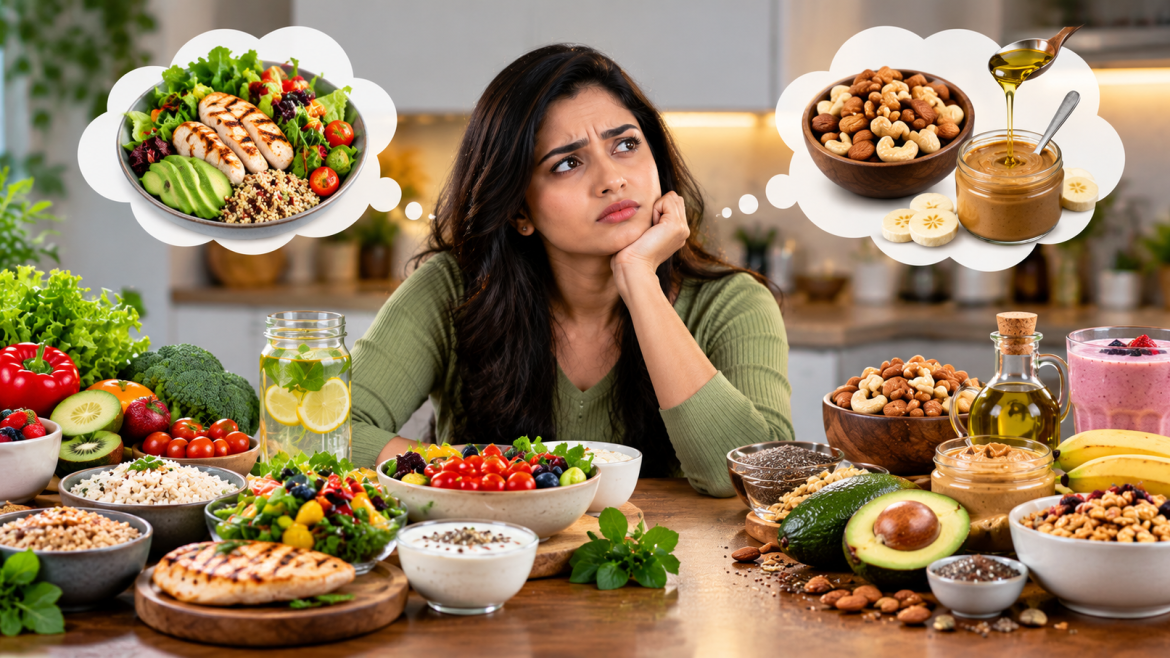
Eating healthy is one of the most important steps toward better nutrition and weight management. But have you ever wondered why you’re not losing weight even though you eat homemade meals, fruits, nuts, salads, and other nutritious foods?
The answer may be simpler than you think.
Healthy foods can still be high in calories, and eating more calories than your body needs can make weight loss difficult.
This doesn’t mean healthy foods are bad. It means that portion sizes, food combinations, cooking methods, and overall calorie intake matter alongside nutritional quality.
In this article, we’ll explore common calorie-dense healthy foods, hidden calories in everyday Indian meals, and practical ways to create a balanced diet without extreme restrictions.
1. Healthy Food Doesn’t Always Mean Low-Calorie Food
One of the most common weight-loss misconceptions is that nutritious foods can be eaten in unlimited quantities.
Foods such as nuts, seeds, peanut butter, avocados, and cooking oils provide valuable nutrients. However, they are also energy-dense.
For example, a handful of nuts can be a nutritious snack, but eating several handfuls throughout the day can add substantial calories.
What to do instead:
Enjoy calorie-dense foods in appropriate portions rather than eliminating them completely.
2. Nuts and Seeds Can Add More Calories Than You Realize
Almonds, walnuts, cashews, chia seeds, flaxseeds, and pumpkin seeds provide healthy fats, fibre, and important nutrients.
However, their calorie content can add up quickly.
| Food | Approximate calories |
|---|---|
| Almonds, 30 g | 175 kcal |
| Cashews, 30 g | 165 kcal |
| Walnuts, 30 g | 195 kcal |
| Chia seeds, 15 g | 75 kcal |
| Peanut butter, 2 tablespoons | 190 kcal |
These are approximate values; actual calories vary by product and portion.
Practical tip: Measure portions occasionally to understand how much you’re eating.
3. Cooking Oil and Ghee Can Add Hidden Calories
Home-cooked food can be nutritious, but the amount of oil or ghee used during preparation can significantly affect its calorie content.
For example:
- 1 teaspoon of oil provides approximately 40 calories.
- 1 tablespoon of oil provides approximately 120 calories.
Adding extra oil to sabzi, dal, paratha, or other meals can increase total calorie intake without making the portion look much larger.
What to do instead:
Use measured amounts of oil and choose cooking methods such as steaming, grilling, roasting, or sautéing with appropriate quantities of fat.
You don’t need to remove healthy fats entirely.
4. Smoothies Can Become Calorie-Dense
Smoothies can be convenient and nutritious, especially when made with fruit, milk, curd, and other wholesome ingredients.
However, combining several calorie-dense ingredients can create a drink with more calories than expected.
For example, a smoothie containing:
- Banana
- Full-fat milk
- Peanut butter
- Honey
- Nuts
- Dates
may provide a substantial amount of energy.
What to do instead:
Choose ingredients according to your nutritional needs. Consider using whole fruit, plain curd, and appropriate portions of nuts or seeds.
Smoothies aren’t inherently unhealthy, but portion size matters.
5. Healthy Snacks Can Still Lead to Excess Calories
Roasted makhana, trail mix, granola bars, dry fruits, and homemade energy balls are often marketed as healthy snacks.
While they can fit into a balanced diet, frequent snacking without considering hunger or portion size can increase overall calorie intake.
Instead of continuously eating throughout the day, try choosing snacks based on genuine hunger.
Some practical options include:
- Fruit with plain curd
- Roasted chana
- Boiled eggs
- A small portion of nuts
- Sprouts chaat
- Vegetable sticks with hummus
6. Homemade Food Is Not Automatically Low in Calories
Indian home-cooked meals can provide excellent nutrition, but preparation methods and portions still matter.
For example, paratha made with generous amounts of oil or ghee may provide substantially more calories than a plain roti of similar size.
Similarly, paneer dishes prepared with cream, butter, or large amounts of oil may be calorie-dense.
The solution is not to stop eating homemade food.
Instead, focus on balanced preparation methods and suitable portions.
7. Healthy Drinks Can Contain Extra Calories
Many people pay attention to their meals but forget about calories from beverages.
Examples include:
- Sweetened tea and coffee
- Packaged fruit juice
- Sweetened smoothies
- Flavoured milk
- Sweetened yogurt drinks
- Energy drinks
Liquid calories may not provide the same fullness as solid foods for some people.
Choose water and unsweetened beverages more often.
8. Large Portions Can Slow Weight-Loss Progress
Even when your diet contains nutritious foods, eating consistently larger portions than your body requires can make weight management challenging.
For example, a meal containing whole-wheat roti, dal, paneer, vegetables, and curd may be nutritionally balanced.
However, the overall calories depend on the quantities consumed and how the foods are prepared.
Remember: Healthy food quality and appropriate food quantity work together.
9. Are You Eating Enough Protein and Fibre?
A meal may contain many calories but still leave you hungry if it lacks sufficient protein and fibre.
Protein-rich foods can support fullness and muscle maintenance.
Fibre-rich foods can help make meals more satisfying.
Include foods such as:
- Dal and legumes
- Paneer and tofu
- Eggs
- Plain curd
- Vegetables
- Whole fruits
- Whole grains
Building balanced meals may help you manage hunger more comfortably.
10. How to Build a Balanced Indian Plate for Weight Loss
Instead of counting every calorie, a simple plate method can help you organize your meals.

Illustrative balanced Indian meal
Try this general approach:
½ plate: Non-starchy vegetables
¼ plate: Protein-rich foods such as paneer, tofu, eggs, chicken, or fish
¼ plate: Roti, rice, or other carbohydrate-rich foods
Dal and legumes provide both protein and carbohydrates, so adjust the other portions accordingly.
This method is a starting point, not a fixed meal plan for everyone.
11. Do You Need to Count Calories to Lose Weight?
Not necessarily.
Calorie tracking can help some people understand their eating habits, but it is not essential for everyone.
Other useful strategies include:
- Eating balanced meals
- Paying attention to hunger and fullness
- Choosing appropriate portions
- Including adequate protein
- Eating more fibre-rich foods
- Staying physically active
- Getting sufficient sleep
The best approach is one that supports your health and can be maintained over time.
12. Common Mistakes That Make a Healthy Diet Too High in Calories
Some everyday habits can increase calorie intake without being obvious.
Mistake 1: Eating large quantities of nuts because they are healthy.
Mistake 2: Using generous amounts of oil or ghee without measuring.
Mistake 3: Drinking calorie-dense smoothies in addition to regular meals.
Mistake 4: Eating multiple snacks without considering hunger.
Mistake 5: Assuming homemade food is always low in calories.
Mistake 6: Ignoring portion sizes of calorie-dense foods.
Mistake 7: Focusing only on food quality while overlooking overall intake.
Recognizing these habits can help you make small, sustainable adjustments.