

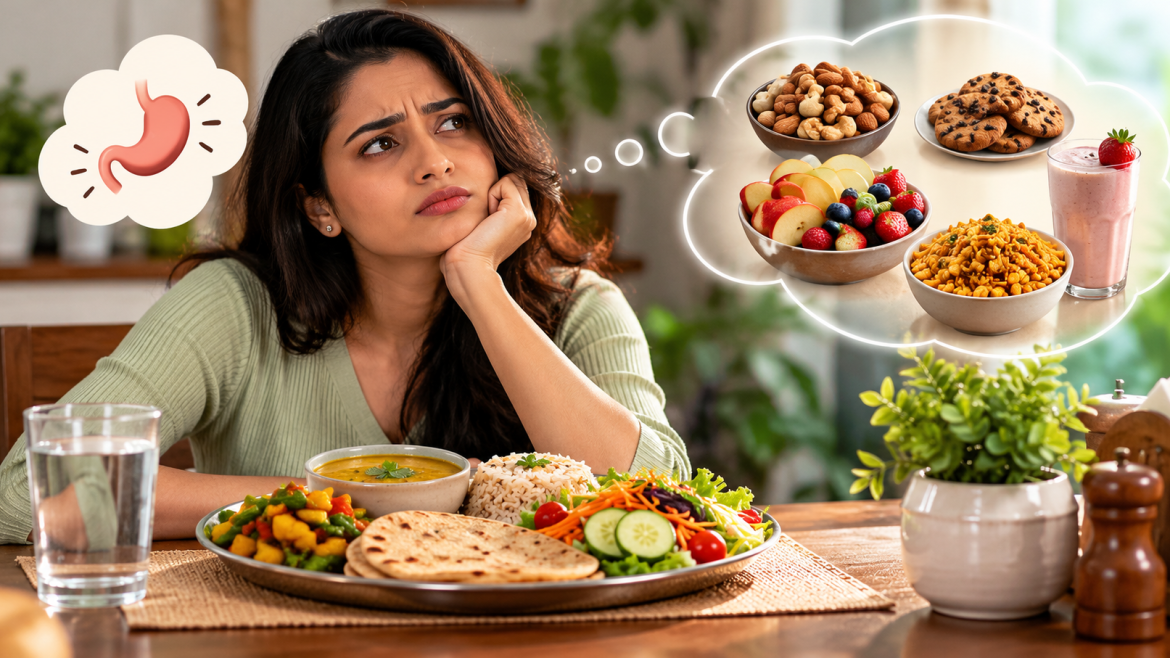
Have you ever finished a full meal and still felt hungry shortly afterward? You may assume you simply ate too little, but feeling full and meeting your body’s nutritional needs are not always the same thing.
Meal composition, protein and fibre intake, eating speed, sleep, hydration, stress, and daily habits can all influence hunger and fullness.
Here are some common reasons why you may still feel hungry after eating.
1. Your Meal Is Low in Protein
Protein is an important nutrient for satiety. A meal that contains mostly carbohydrates but very little protein may feel filling initially but may not keep you satisfied for as long.
For example:
Instead of: Roti + potato sabzi
Try: Roti + dal/paneer + vegetables + curd
Useful protein sources include:
- Dal
- Paneer
- Tofu
- Eggs
- Curd
- Greek yogurt
- Chicken
- Fish
- Rajma
- Chole
- Soy
Try to include an appropriate protein source in your main meals.
2. You’re Not Eating Enough Fibre
Fibre adds bulk to meals and can contribute to fullness.
Highly refined foods often contain less fibre than minimally processed alternatives.
Good fibre sources include:
- Vegetables
- Whole fruits
- Whole grains
- Dal and legumes
- Beans
- Nuts
- Seeds
A simple strategy is to make vegetables a substantial part of your lunch and dinner.
3. Your Meal Contains Mostly Refined Carbohydrates
Foods such as sugary cereals, biscuits, pastries, sweets, and some refined snacks can be easy to consume quickly and may not provide lasting satiety.
You don’t need to eliminate carbohydrates.
Instead, combine carbohydrate foods with protein, fibre, vegetables, and appropriate amounts of healthy fats.
For example:
Poha + sprouts
Fruit + curd
Toast + eggs
Rice + dal + vegetables
4. You Eat Too Quickly
Eating very quickly may make it harder to notice your body’s fullness signals during the meal.
Try slowing down by:
- Chewing properly
- Putting your spoon down occasionally
- Eating without rushing
- Paying attention to your food
- Minimizing distractions when possible
You don’t need to count every bite. Simply giving yourself enough time to eat can help you recognize fullness more easily.
5. You May Be Thirsty
Thirst and hunger are different signals, but when you’re busy or distracted, it can sometimes be difficult to interpret what your body needs.
Stay adequately hydrated throughout the day rather than drinking large amounts of water only when you suddenly feel hungry.
Water is generally the simplest choice for hydration.
6. You’re Not Sleeping Enough
Poor sleep can influence hormones and brain pathways involved in appetite regulation.
After inadequate sleep, some people may experience increased hunger or stronger cravings for calorie-dense foods.
Good nutrition therefore isn’t only about what’s on your plate.
Aim for a regular sleep routine and adequate sleep based on your individual needs.
7. Stress May Be Driving Your Appetite
Not every desire to eat is caused by physical hunger.
Stress, boredom, anxiety, habits, and emotions can sometimes trigger the desire to eat even after a sufficient meal.
Before reaching for another snack, ask yourself:
“Am I physically hungry, or do I want to eat because I’m stressed, bored, or following a habit?”
There is nothing wrong with occasionally eating for enjoyment. The goal is simply to become more aware of your eating patterns.
8. Your Meal May Be Too Restrictive
Sometimes a meal looks large because it contains plenty of low-calorie vegetables, but it may still provide too little energy, protein, or fat for your needs.
Trying to make every meal extremely low-calorie can leave you hungry and make a diet difficult to maintain.
A balanced meal should be nutritious and satisfying, not simply as low in calories as possible.
What Does a Filling Meal Look Like?
A simple balanced plate can include:
½ plate: Vegetables
¼ plate: Protein-rich food
¼ plate: Roti, rice or another carbohydrate source
Include an appropriate amount of healthy fat as part of the meal.
For an Indian meal, this might look like:
Roti + Dal + Mixed Sabzi + Salad + Curd
or
Rice + Rajma + Vegetables + Salad
Individual portions will depend on your nutritional requirements.
Physical Hunger vs Cravings
Learning the difference can be useful.
Physical hunger often develops gradually and can usually be satisfied by a variety of foods.
Cravings may appear suddenly and can involve a strong desire for a particular food.
However, hunger and cravings are complex, and there is no need to feel guilty about either.
The aim is awareness—not extreme restriction.