

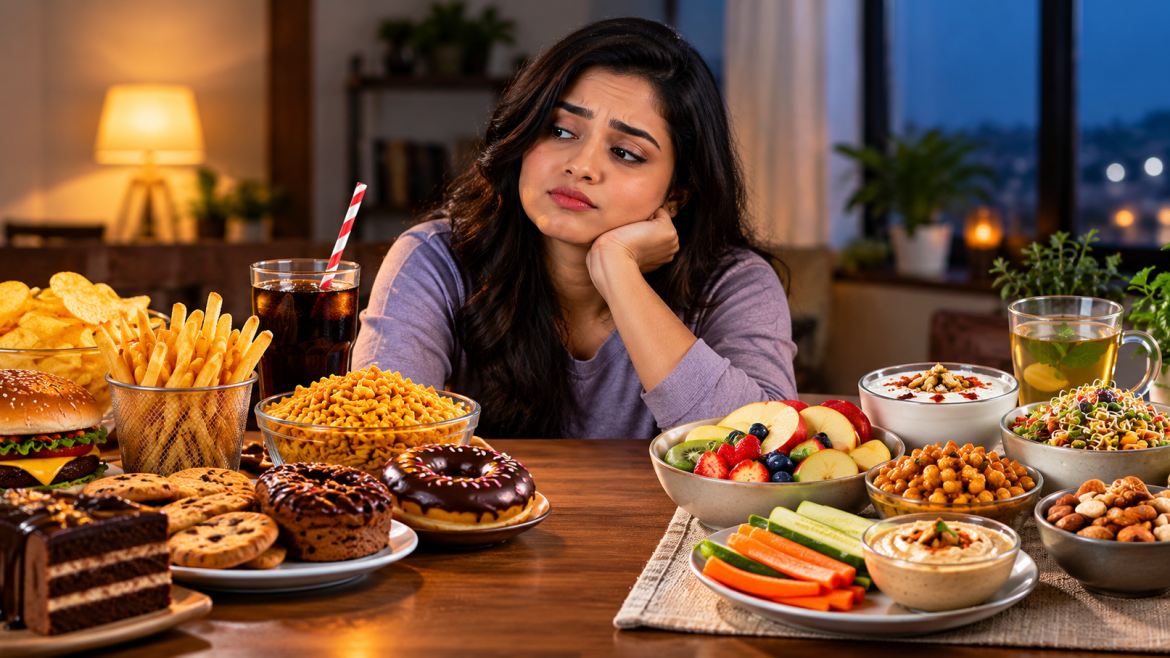
Evening cravings are common, especially after a busy or stressful day. You may eat well throughout the morning and afternoon but suddenly find yourself wanting chips, sweets, biscuits, chocolate, or other snacks in the evening.
The solution is not necessarily to ignore hunger or skip food. In many cases, improving your meal timing, protein and fibre intake, sleep, hydration, and snack choices can make evening cravings easier to manage.
Here are practical ways to control evening cravings without starving yourself.
Why Do Evening Cravings Happen?
Evening cravings can happen for several reasons, including:
- Eating too little during the day
- Skipping meals
- Low protein intake
- Long gaps between meals
- Stress or boredom
- Poor sleep
- Habitual snacking
- Having highly tempting foods readily available
Understanding why you’re hungry is more useful than simply trying to use willpower.
1. Don’t Eat Too Little During the Day
One common mistake during weight loss is severely restricting food during the morning and afternoon.
You might have:
Tea for breakfast → Small lunch → Nothing until evening
By evening, your body may be genuinely hungry, making highly palatable foods much harder to resist.
Instead, aim for balanced meals throughout the day.
2. Include Protein at Lunch
A lunch containing mostly roti or rice with very little protein may not keep you satisfied for long.
Try including a protein source such as:
- Dal
- Paneer
- Tofu
- Curd
- Eggs
- Chicken
- Fish
- Rajma
- Chole
- Soy
For example:
Roti + Dal + Sabzi + Curd
is generally more balanced than eating mainly roti with a small amount of sabzi.
3. Plan an Evening Snack
If you’re genuinely hungry between lunch and dinner, having a planned snack can be more practical than trying to avoid food completely.
Healthy Indian snack options include:
- Roasted chana
- Plain curd
- Fruit + nuts
- Boiled eggs
- Sprouts chaat
- Paneer with vegetables
- Roasted makhana
- Besan or moong chilla
Choose portions appropriate for your individual needs.
4. Combine Protein and Fibre
Protein and fibre can help make snacks more satisfying.
Instead of:
Biscuits + Tea
consider:
Fruit + Plain Curd
or
Roasted Chana + Cucumber
or
Apple + Small Portion of Nuts
The goal isn’t to eliminate carbohydrates but to create a more balanced snack.
5. Check Whether You’re Hungry or Just Craving Something
Before reaching for food, ask:
“Would I eat a normal meal or nutritious snack right now?”
If the answer is yes, you may genuinely be hungry.
If you only want one very specific food—such as chocolate or chips—it may be a craving rather than physical hunger.
That doesn’t mean you can never eat the food you crave. Awareness simply helps you make a conscious choice.
6. Stay Hydrated
Sometimes people go through a busy day without drinking enough fluids.
Keep water accessible throughout the day rather than waiting until evening.
However, don’t use water as a way to suppress genuine hunger. If you’re truly hungry, your body may need food.
7. Don’t Completely Ban Your Favourite Foods
Extremely restrictive rules such as:
“I can never eat chocolate.”
or
“No snacks after 5 PM.”
can be difficult to maintain.
For some people, completely banning favourite foods can make cravings feel stronger.
A sustainable eating pattern can include enjoyable foods in appropriate portions.
8. Pay Attention to Sleep
Poor sleep can affect appetite regulation and may increase hunger or cravings the following day.
If evening cravings are happening regularly, look beyond your diet.
Ask yourself:
Am I sleeping enough?
Maintaining a consistent sleep routine can support overall health and appetite regulation.
9. Manage Stress Without Always Using Food
After a stressful day, food can become an easy source of comfort.
Try developing additional ways to unwind, such as:
- Going for a walk
- Listening to music
- Taking a shower
- Reading
- Talking with family or friends
- Practising relaxation techniques
Emotional eating occasionally is not a failure. The goal is to have more than one strategy for managing stress.
10. Make Dinner Satisfying
Trying to eat an extremely small dinner because you’re losing weight can sometimes leave you hungry later.
Build a balanced dinner containing:
Vegetables + Protein + Appropriate Carbohydrates + Healthy Fats
For example:
Paneer + Sabzi + Roti
or
Dal + Rice + Vegetables + Curd
A satisfying meal may reduce the desire to continuously snack afterward.
Better Evening Snack Swaps
Instead of chips, try roasted chana or an appropriately portioned roasted snack.
Instead of sweetened flavoured yogurt, try plain curd with fruit.
Instead of several biscuits, consider fruit with nuts or another balanced snack.
Instead of sugary drinks, choose water or an unsweetened beverage more often.
These don’t need to be rigid substitutions every single time. They’re simply options for improving your everyday eating pattern.
Should You Ignore Hunger to Lose Weight?
No.
Weight loss does not require being hungry all evening.
A sustainable approach should provide adequate nutrition while creating an appropriate overall energy balance.
Constant hunger can be a sign that your eating plan is too restrictive, poorly balanced, or not suited to your needs.